Day 7 after a hair transplant often feels like a turning point and a source of anxiety at the same time. Many patients finally feel more normal, yet the mirror still shows redness, scabs, patchy density, and itching that does not match what they hoped recovery would look like.
That emotional gap is common. Early healing rarely looks like a finished result. According to StatPearls guidance on wound healing, the first week after surgery is still part of acute recovery, when the scalp is forming protective crusts, reducing swelling, and stabilizing newly placed grafts.
At Turkus Hair Transplant Clinic in Spain, the priority on day 7 remains graft survival first. Turkish surgical expertise supports our team, but your washing instructions, activity limits, and follow-up stay local in Spain. Personalized hair transplant aftercare matters more than guessing from random online timelines.
Specialists at Turkus Hair Transplant Clinic, Spain note: "Patients often ask whether day 7 looks wrong when, in many cases, the scalp is simply progressing through a normal early phase that still requires careful protection."
This guide explains what a hair transplant should look like after 7 days, whether grafts are secure, how to manage scabs and washing, which activities are safe, warning signs to watch for, and what happens after the first week. If you are comparing FUE, Sapphire FUE, or DHI recovery, the principles overlap, but technique and scalp sensitivity can change how day 7 feels.
Quick Insights
- Day 7 is still early recovery, not the final result.
- Redness, scabs, and patchiness may remain normal.
- Grafts are usually more stable than days 1 to 3, but trauma and picking still risk loss.
- Wash only with clinic-approved technique; do not force scabs off.
- Itching is common; scratching is not safe.
- Avoid gym, sauna, swimming, tight hats, alcohol, and smoking unless cleared.
- Contact your clinic for pus, fever, spreading redness, or sudden heavy shedding with pain.
- Shock loss may appear later; growth follows a months-long timeline.
What Should Your Hair Transplant Look Like After 7 Days?
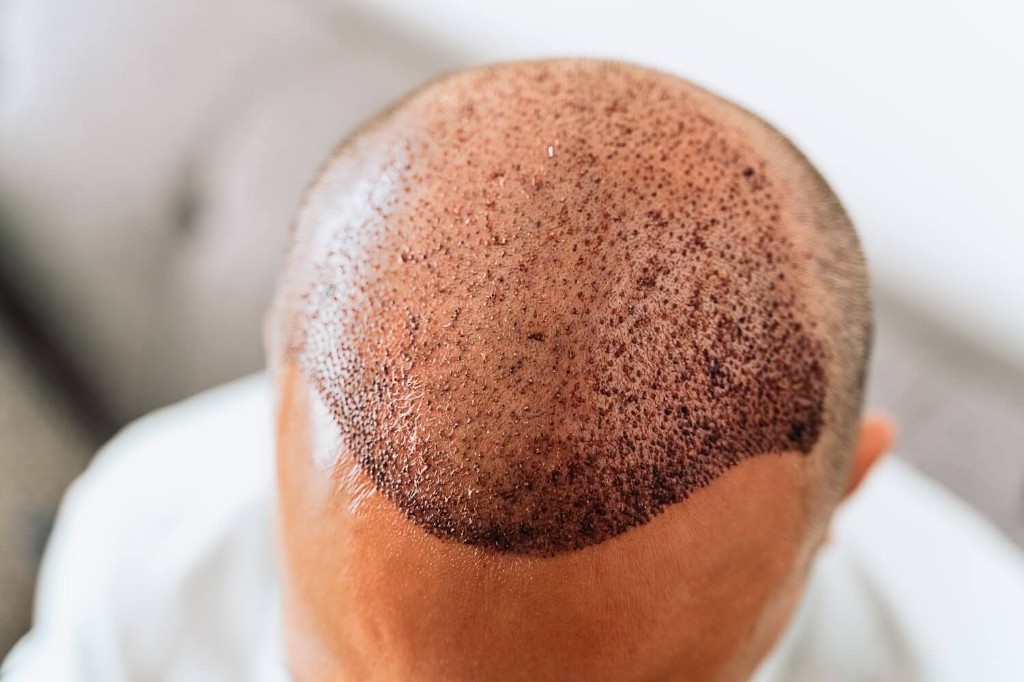
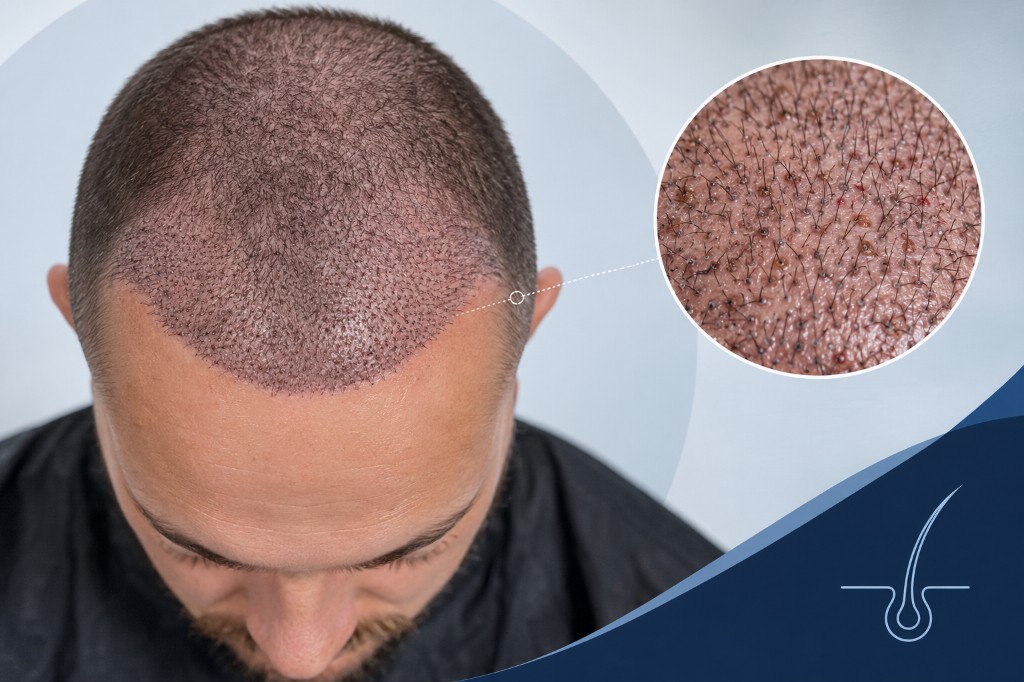
After 7 days, many patients expect a cleaner scalp and clearer hairline. In reality, the recipient area may still look dotted, pink, or uneven. The donor zone may feel less tender, but it can remain sensitive, especially after FUE extraction.
Redness around grafts is often normal during early healing. Mild swelling may still be present around the forehead or temples in some patients, though it is usually improving by this point.
Are scabs still normal on day 7?
Yes. Scabs or crusts around graft sites commonly remain at day 7. Guidance from the International Society of Hair Restoration Surgery emphasizes that crusting protects healing follicles and should not be picked or scraped off aggressively.
Some scabs may begin loosening with approved washing. Others may stay attached longer depending on skin type, technique, and your clinic protocol. Forcing them off early is one of the most common preventable mistakes.
Why can hair look patchy after one week?
Patchiness does not mean grafts failed. Short transplanted hairs, crusting, local redness, and uneven shedding can make density look irregular. Many patients also compare day 7 to pre-op photos and forget that visible growth still takes months.
If you are unsure whether your appearance is within a normal range, review your clinic instructions or ask for a photo check rather than searching for day-by-day photos from unrelated cases.
Specialists at Turkus Hair Transplant Clinic, Spain note: "A dotted, red, or uneven look at one week often reflects healing mechanics, not the final aesthetic outcome."
Are Hair Grafts Secure After 7 Days?
By day 7, graft anchoring is usually stronger than during the first 72 hours, when friction, sweating, or sleeping position can dislodge fragile follicles more easily. That improved stability is reassuring, but it is not permission to treat the scalp normally.
Grafts can still be lost through scratching, picking scabs, direct trauma, tight headwear, strong shower pressure, or gym activity that causes sweating and rubbing.
How do grafts anchor during the first week?
After implantation, follicles rely on initial clotting, tissue integration, and early healing around the graft channel. Over the first week, that bond strengthens gradually. Healing speed varies between patients and may differ slightly between FUE and DHI cases depending on implant depth, scalp tension, and aftercare compliance.
Can grafts fall out on day 7?
Yes, but context matters. A graft dislodged with bleeding or a visible empty pit is different from a small hair shaft shedding while the follicle remains in place. Patients often panic when they see hairs on a pillow or in the basin and assume the graft is gone.
If you notice repeated loss from the same area, pain, bleeding, or crusts lifting with visible empty sites, contact your clinic. Do not pull at scabs to inspect grafts.
What accidental damage should you avoid?
- Scratching itchy areas
- Rubbing with a towel
- Sleeping face down on the recipient zone
- Wearing tight caps or helmets
- High-pressure shower streams on grafts
- Contact sports or gym friction
Specialists at Turkus Hair Transplant Clinic, Spain note: "Day 7 is safer than day 2, but gentle behavior still protects the result more than any single product."
Hair Transplant Scabs After 7 Days
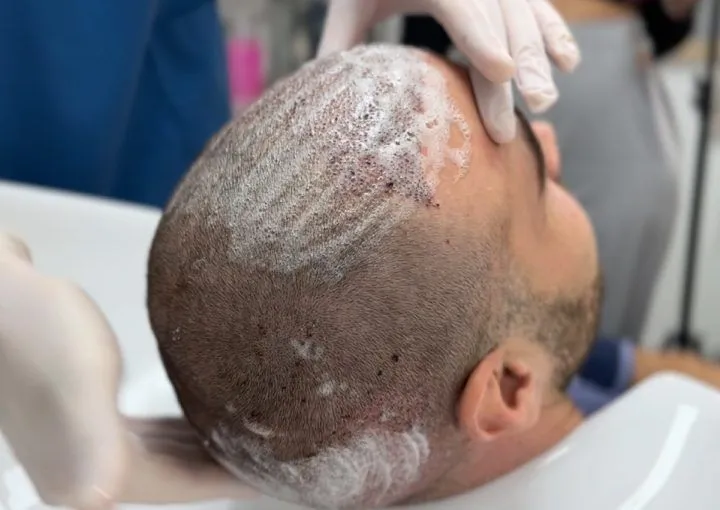
Scab care is one of the most important parts of hair transplant aftercare during the first 10 to 14 days. On day 7, many clinics allow a structured wash routine using lotion, foam, or mild shampoo, but instructions differ and should be followed exactly.
When do scabs usually fall off?
Scabs often begin loosening between days 7 and 14, though some patients clear earlier and others later. Skin type, washing frequency, humidity, and technique all influence timing. If scabs remain beyond your clinic expected window, ask for guidance instead of scraping them.
Why should you avoid picking scabs?
Picking can pull grafts, reopen healing sites, increase infection risk, and create pinpoint scarring. Patients sometimes pick because they want a cleaner look for work or social plans. That cosmetic impatience is a common cause of early graft loss.
How should you wash on day 7?
Use only clinic-approved products and water temperature. Typical guidance includes applying recommended foam or lotion, waiting the instructed time, rinsing gently without nail pressure, patting dry without rubbing, and avoiding hairdryer heat on high settings near the scalp.
Do not switch to regular styling products, anti-dandruff formulas, or medicated shampoos unless your team approves them. If you want a broader recovery roadmap, our hair transplant FAQ and aftercare resources can supplement, not replace, your personal plan.
Specialists at Turkus Hair Transplant Clinic, Spain note: "The safest wash is the one your clinic taught you, repeated consistently, not a stronger routine found online."
Swelling, Itching, and Redness
Swelling, itching, and redness often overlap during the first post-operative week. By day 7, swelling is usually improving, but some forehead or eye-area puffiness may linger, especially if it peaked around days 3 to 5.
Is swelling still normal on day 7?
Mild residual swelling can be normal. Severe swelling, sudden worsening, vision changes, or spreading inflammation deserve prompt clinic contact. Sleeping elevated during the first week often helps fluid drain away from the forehead.
Why does itching happen?
Itching commonly occurs as skin heals and scabs tighten. The American Academy of Dermatology notes that healing skin may feel itchy as new tissue forms. That sensation does not justify scratching.
If itching is intense, ask your clinic about safe options such as approved sprays, antihistamines, or technique adjustments. Do not use unapproved oils or numbing creams on fresh grafts.
How long can redness last?
Recipient redness may persist for days to weeks depending on skin tone, technique, and sun exposure. Donor redness after FUE often fades progressively but can remain visible under bright light. Redness alone is not always a complication if it is stable and improving.
When is redness concerning?
- Spreading warmth with increasing pain
- Pus or yellow discharge
- Fever or feeling unwell
- Red streaking away from the scalp
- Areas turning dark or black
Specialists at Turkus Hair Transplant Clinic, Spain note: "Itching feels urgent, but scratching creates the kind of damage patients were trying to avoid on day 1."
What Activities Are Safe on Day 7?

Day 7 is not a return to full normal life for most patients. Many desk workers feel ready to resume office or remote work, but physical habits still need limits until your clinic clears the next stage.
Can you wear a hat on day 7?
Only if your clinic approves it. A loose, clean, breathable hat may be acceptable for short outdoor time. Tight caps, helmets, and anything that rubs the recipient area should stay off until you are cleared.
Can you exercise on day 7?

Heavy exercise, weight training, running, cycling, football, boxing, and sauna use are usually still restricted because sweating and increased blood flow can irritate healing grafts. Light walking may be acceptable if it does not cause sweating or head contact.
Sleep, smoking, alcohol, sauna, and intimacy
Continue sleeping in a position that protects the graft zone until cleared. Many patients still avoid face-down sleeping at day 7. Alcohol and smoking may impair healing and should remain limited according to clinic guidance. Sauna, steam rooms, swimming pools, and sunbeds are usually avoided. Sexual activity is not forbidden for every patient, but avoid positions or contact that rub or press the scalp.
Specialists at Turkus Hair Transplant Clinic, Spain note: "Patients often feel mentally recovered before the scalp is physically ready. Following the slower timeline protects the investment."
What Complications Can Appear Around Day 7?
Most patients progress without major issues, but day 7 is still within the window when infection, folliculitis, or mechanical graft loss can appear if aftercare breaks down. Knowing the difference between normal healing and warning signs reduces panic and delays.
What infection signs matter?
- Increasing pain instead of gradual improvement
- Pus or foul odor
- Fever or chills
- Rapidly spreading redness
- Hard, hot, or very tender zones
What is folliculitis after a hair transplant?
Folliculitis refers to inflammation around hair follicles. It may appear as small pimples or red bumps in the recipient or donor area. Mild cases may settle with clinic-directed care, but persistent or painful lesions should be reviewed promptly.
Graft dislodgement vs shedding crusts
A dislodged graft may leave a visible empty site, sometimes with bleeding or pain. Shed hairs attached to loosening crusts are different and may not mean the follicle was lost. If you are unsure, send photos to your clinic rather than probing the area.
When should you contact the clinic?
Contact your team for pus, fever, severe pain, heavy bleeding, blackened skin patches, sudden widespread graft loss, or symptoms that worsen instead of improving. Early guidance prevents small issues from becoming larger setbacks.
Specialists at Turkus Hair Transplant Clinic, Spain note: "A quick photo review is often enough to separate normal day-7 healing from a problem that needs treatment."
What Happens After the First Week?
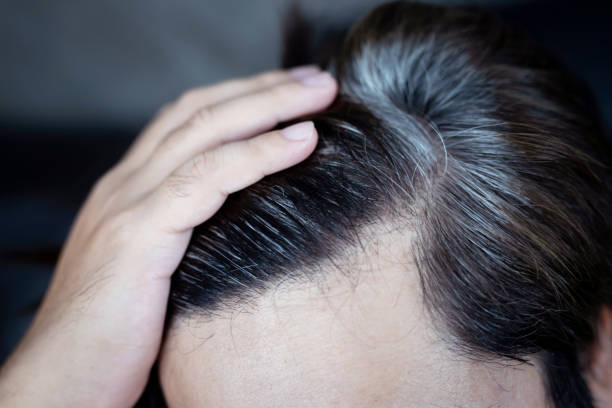
Once the first week ends, many patients focus on when density will return. That timeline is longer than social media suggests. Shock loss may appear in the weeks after surgery, when transplanted or native hairs shed before new growth cycles begin.
Shock loss after hair transplant is often temporary, though timing and severity vary. Our dedicated shock loss article explains patterns and when evaluation is useful.
What does the growth timeline look like?
Visible cosmetic improvement usually builds over months, not days. Many patients notice early stubble around months 3 to 4, with more meaningful density commonly discussed between months 6 and 12. Full maturation may continue beyond one year depending on hair type and plan.
By day 10, scabs are often clearing for many patients, but timelines differ. Do not compare yourself to another patient photo if your clinic gave different washing steps or if your skin heals more slowly.
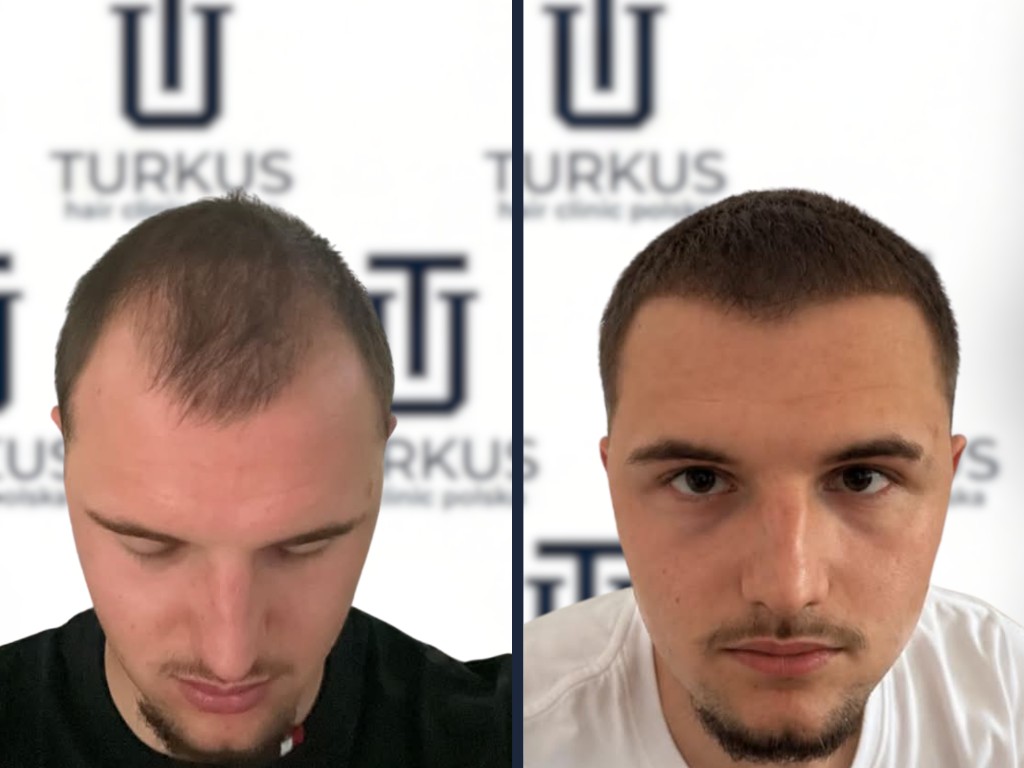
Why results look worse before they look better
Redness fades, scabs clear, shock loss resolves, and new hairs emerge at different speeds across zones. That uneven journey creates a middle phase where patients feel the procedure failed. In many cases, the scalp is transitioning rather than losing grafts.
How technique affects early healing
FUE, Sapphire FUE, and DHI may all be suitable after evaluation. FUE donor healing, recipient crusting, and implant handling can differ slightly between methods. DHI may involve less channel creation in some plans, but aftercare rules around scratching, sweating, and washing still apply.
Technique choice should be made during consultation in Spain based on pattern, donor capacity, and goals, not based on which method promises the fastest day-7 appearance online.
FUE vs DHI Recovery After 7 Days
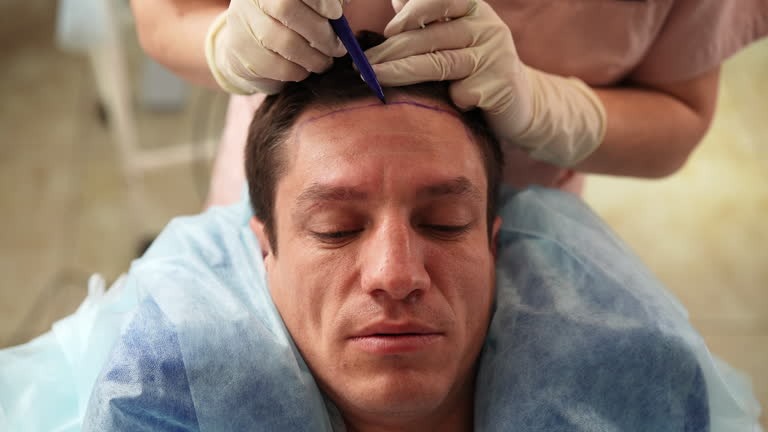
After FUE hair transplant, the donor area often shows small scabs or pink dots from extraction sites. The recipient zone may look more dotted where grafts were placed. After DHI hair transplant, the implanted area may still show redness and microcrusts along the hairline or mid-scalp depending on the plan.
FUE at day 7
Donor tightness, itching, and mild soreness may remain. Avoid gym strain that pulls neck and scalp skin. Continue approved washing and protect the donor from sun and friction.
DHI at day 7
Hairline zones treated with DHI may remain sensitive because aesthetic detail matters early. Do not judge line design while crusting remains. Follow-up photos help your team assess symmetry once healing settles.
Shared rules for both techniques
No picking, no tight hats, no unapproved products, and no heavy sweating. Whether your plan used FUE, Sapphire FUE, or DHI, graft protection comes before convenience.
Recovery Advice for Day 7 and Beyond
Use day 7 as a checkpoint, not a finish line. Take photos in consistent lighting, note itching or redness changes, and confirm your next washing stage with your clinic if anything is unclear.
Keep hydration steady, sleep elevated if swelling persists, and avoid alcohol or smoking if your team still recommends abstinence. Do not add minoxidil, finasteride, or scalp treatments unless approved for your timeline.
Practical day-7 checklist
- Follow the exact wash routine you were taught
- Pat dry; do not rub
- Avoid gym, sauna, and swimming
- Use loose head cover only if approved
- Do not evaluate final density
- Contact the clinic with photos if unsure
Specialists at Turkus Hair Transplant Clinic, Spain note: "The patients who do best at day 7 are usually not the ones who do the most online research, but the ones who follow one clear plan consistently."
Why Choose Turkus Hair Transplant Clinic?
Turkus is a Turkish-led hair transplant clinic in Spain. Turkish surgical expertise is part of our team; your consultation, procedure planning, and aftercare stay local in Spain.
We focus on natural-looking results, clear communication, and personalized follow-up in Spain. We do not recommend traveling to Turkey instead of local care.
Options such as FUE, DHI, and Sapphire FUE may be suitable after evaluation. Results vary between patients; graft estimates require a consultation, not online guesses.
Specialists at Turkus Hair Transplant Clinic, Spain note: "The goal is an honest plan based on your pattern and goals, not promises that apply to every patient."
FAQs About Hair Transplant Day 7
What should a hair transplant look like after 7 days?
Redness, scabs, and patchiness are common. The scalp may still look dotted or pink while healing progresses. That appearance does not represent the final result.
Are grafts secure after 7 days?
Grafts are usually more stable than in the first few days, but scratching, picking, sweating, and trauma can still dislodge them. Gentle care remains essential.
Can I remove scabs on day 7?
Only through the clinic-approved washing method. Do not pick, scrape, or force crusts off with nails or tools.
Can I wash my hair on day 7?
Many patients wash by day 7 using clinic-approved foam, lotion, or mild shampoo. Technique matters more than timing alone.
Is itching normal on day 7?
Yes, itching is common during healing. Scratching is not safe. Ask your clinic about approved relief if symptoms are strong.
Can I exercise on day 7?
Heavy exercise, sweating, and sauna are usually still avoided. Light walking may be acceptable if your clinic agrees and you stay cool.
Can I wear a hat on day 7?
Only if approved. Choose a loose, clean, breathable option that does not rub grafts.
When should I worry about redness or swelling?
Worry if redness spreads quickly, pain increases, pus appears, fever develops, or swelling worsens after improving.
Is shock loss normal after the first week?
Shock loss may occur in the weeks after surgery and is often temporary. Sudden painful loss with empty pits should be reviewed by your clinic.
When should I contact Turkus after day 7?
Contact us for infection signs, heavy bleeding, blackened skin, suspected graft loss, or if you are unsure whether your healing matches your instructions. A free consultation can also help before surgery if you are still planning FUE or DHI in Spain.
Unsure Whether Your Day-7 Recovery Looks Normal?
Day 7 can feel reassuring and confusing at the same time. Scabs, redness, itching, and patchiness may be normal, but only in context with your technique, washing stage, and symptom trend.
At Turkus Hair Transplant Clinic in Spain, we provide local aftercare guidance in Spain, follow-up support, and honest timelines based on your plan. Results vary between patients; personalized evaluation is recommended before drawing conclusions from day-7 photos alone.
Specialists at Turkus Hair Transplant Clinic, Spain note: "If you are comparing your scalp to someone else day 7, ask a clinician who knows your case instead of assuming the worst."
Request a free consultation or send your recovery questions to our team if you want clarity on washing, activity limits, or whether your healing is on track. We can also explain what to expect after day 10 and through the months that follow.