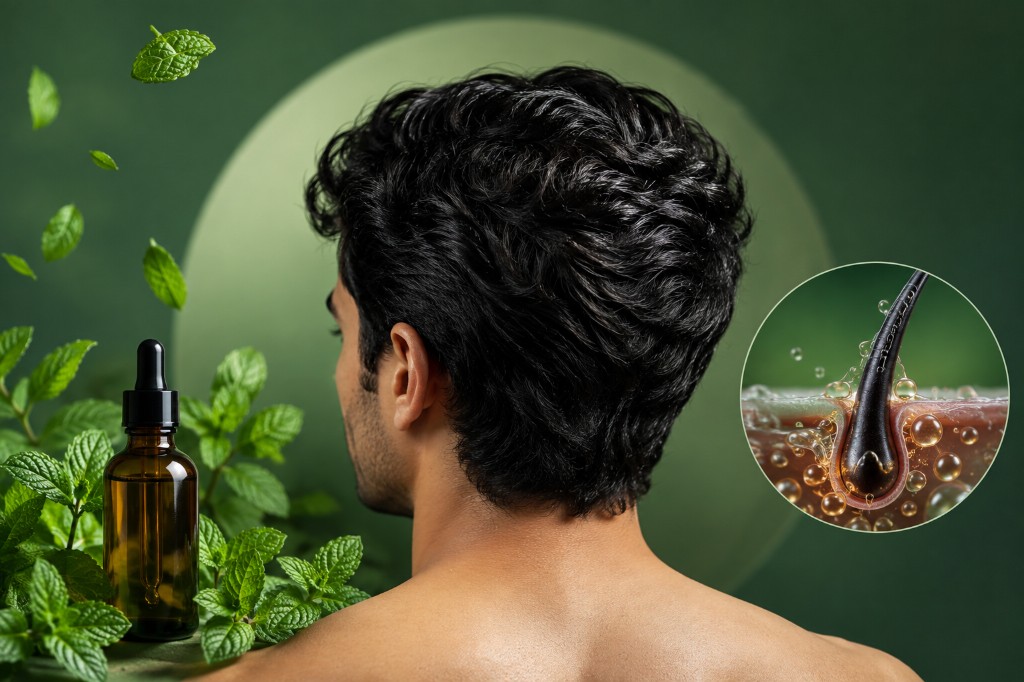
Peppermint oil for hair has gone viral many times. Short clips show tingling scalps, glossy lengths, and dramatic before-and-after claims. The ingredient feels accessible, smells fresh, and fits DIY routines. That combination makes it easy to share, even when the science behind the claims stays thin.
Most enthusiasm online comes from animal studies, small lab models, and personal anecdotes. Human clinical evidence for peppermint oil as a hair loss treatment remains limited. A frequently cited 2014 study in Toxicological Research compared topical peppermint oil with minoxidil in mice, not in people. Results in rodents do not automatically translate to proven regrowth in androgenetic alopecia.
According to materials indexed in PubMed and PMC, peppermint oil may influence blood flow sensation, follicle signaling pathways, and scalp comfort in experimental settings. Those findings are interesting for researchers. They are not the same as FDA-approved therapies or long-term human outcomes.
At Turkus Hair Transplant Clinic in Spain, patients often ask whether peppermint oil can replace medical evaluation. The honest answer starts with a distinction: scalp comfort, cosmetic shine, and temporary fullness are different from reversing progressive follicle miniaturization.
Specialists at Turkus Hair Transplant Clinic, Spain note: "Peppermint oil may support a healthier-feeling scalp for some people. It should not be treated as a proven cure for genetic hair loss without a proper diagnosis."
This guide explains what peppermint oil does on the scalp, what the 2014 mouse study actually showed, realistic benefits, side effects, safe dilution and application, how it compares with rosemary oil, when medical care matters, and who should avoid it. If you are searching for thicker hair or worried about hormonal hair loss, understanding the limits of oils helps you choose smarter next steps.
Quick Insights
- Peppermint oil contains menthol, which creates cooling and tingling on the scalp.
- Viral growth claims often rely on animal studies, not large human trials.
- A 2014 mouse study showed interesting follicle activity signals; human proof for AGA reversal is lacking.
- Oils may improve scalp comfort, oil balance, and cosmetic appearance in some routines.
- Undiluted essential oil can irritate skin, trigger allergy, or worsen shedding from inflammation.
- Peppermint oil is not equivalent to minoxidil, finasteride, PRP, or hair transplant surgery.
- Patch testing and carrier-oil dilution are essential before regular use.
- Breakage and low hair porosity can mimic thinning without true follicle loss.
- A trichologist or hair loss evaluation helps when part lines widen or temples recede.
- Early medical assessment usually preserves more options than waiting on DIY trends alone.
What Does Peppermint Oil Do?
Peppermint oil is a concentrated essential oil distilled from Mentha piperita. Its most recognizable effect is menthol, a compound that activates cold-sensitive receptors in the skin. That is why many people describe a fresh, tingling sensation seconds after application.
On the scalp, that cooling feeling is often mistaken for proof that follicles are waking up. Sensation and biology are related, but they are not identical. Tingling can occur even when no meaningful change in hair density follows.
Some users report that peppermint routines make the scalp feel cleaner, less itchy, or more comfortable after exercise or product buildup. Others like the cosmetic effect on shine when a tiny amount is applied to lengths. Those experiences are valid. They still differ from medically documented regrowth.
Menthol, cooling, and scalp sensation
Menthol does not freeze the scalp. It triggers nerve pathways that the brain interprets as coolness. For some people that reduces the urge to scratch, which may protect fragile hairs from mechanical damage.
Cooling can also make a routine feel refreshing after workouts or during seasonal dryness. That psychological comfort matters, especially when hair concerns feel stressful. Still, reduced scratching is not the same as creating new follicles.
Scalp support vs hair loss treatment
Healthy scalp conditions generally support normal hair cycling. Gentle cleansing, balanced sebum, and reduced inflammation may help existing hairs look their best. Peppermint oil is sometimes added to shampoos, scalp scrubs, or diluted serums for that reason.
When shedding relates to hormonal hair loss or progressive miniaturization, scalp comfort alone rarely stops the underlying process. That is where professional assessment becomes more useful than another viral oil mix.
Realistic expectations
If your goal is softer lengths, less buildup, or a pleasant scalp routine, peppermint oil may fit as a complementary step. If your goal is to stop recession or restore density in androgenetic alopecia, evidence-based medical options deserve priority.
Hair porosity also shapes how oils behave on the shaft. Low porosity hair may feel coated quickly, while high porosity ends may absorb oils yet still look dry. Cosmetic results vary widely.
Specialists at Turkus Hair Transplant Clinic, Spain note: "We encourage patients to separate what feels good on the scalp from what has been shown to change follicle biology in humans at scale."
Is Peppermint Oil Good for Hair Growth?
This is the question behind most viral posts. The honest short answer: peppermint oil may support scalp conditions that help hair look healthier, but it has not been proven to reverse androgenetic alopecia in robust human trials.
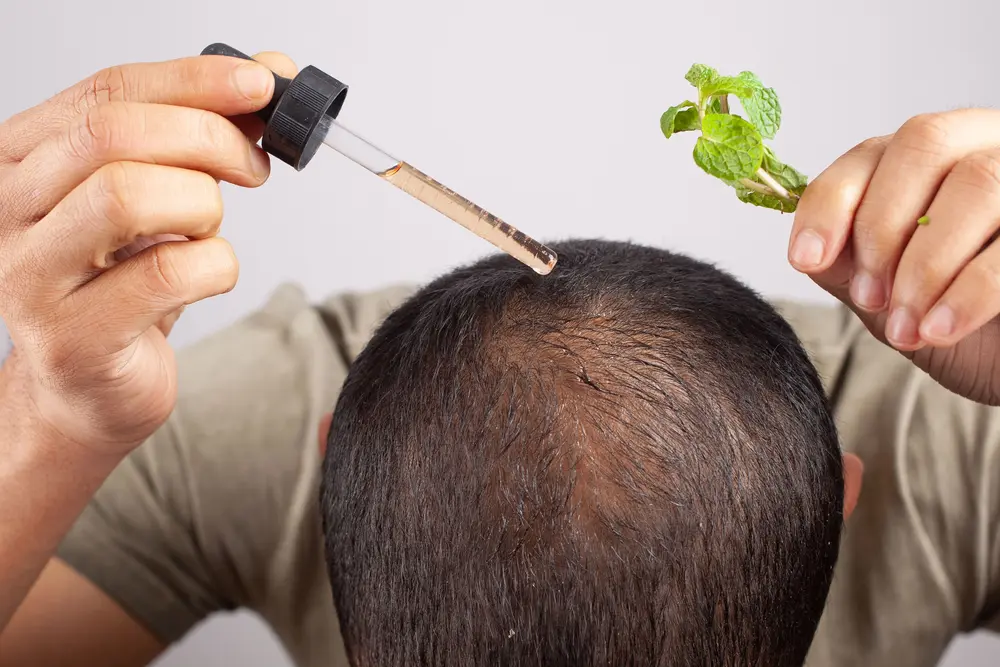
Interest spiked after a 2014 study published in Toxicological Research tested topical peppermint oil against saline and minoxidil in shaved mice over four weeks. Researchers reported increased follicle depth, dermal thickness, and hair count in the peppermint group compared with controls. The minoxidil group also showed growth signals. The study is frequently shared without the critical context: it was an animal model with a different species, skin thickness, and hair cycle.
What the 2014 study did and did not prove
The 2014 paper is real and indexed on PubMed. It suggests peppermint oil may influence pathways linked to follicle development in mice. That is valuable for research. It is not a license to claim guaranteed human regrowth.
Human scalp hair cycles over months. Patterned hair loss involves genetics, hormones, and miniaturization over years. Mouse models cannot replicate that complexity fully. No large randomized controlled trial in people with androgenetic alopecia has established peppermint oil as an equivalent alternative to minoxidil.
Peppermint oil vs minoxidil
Minoxidil remains an approved topical therapy with extensive human data for many patients with androgenetic alopecia. It may extend growth phases and strengthen miniaturized hairs in selected individuals. Results vary and require consistent use.
Peppermint oil is sometimes described online as a natural minoxidil. That comparison oversimplifies both products. Minoxidil has a defined regulatory history and clinical monitoring expectations. Peppermint oil is sold as a cosmetic or aromatherapy ingredient without the same evidence standard.
Thinning, shedding, and when oils are not enough
Diffuse shedding from stress, nutrition, or postpartum shifts may improve when triggers resolve. Oils might play a minor supporting role there. Patterned thinning at temples or crown usually signals miniaturization that oils alone rarely stop.
If you want thicker hair cosmetically, routines that reduce breakage may help. If you want to preserve active follicles, earlier evaluation usually matters more than waiting months on essential oil experiments.
Specialists at Turkus Hair Transplant Clinic, Spain note: "Animal data can guide research directions. Treatment decisions for human hair loss still require human-level diagnosis and follow-up."
Benefits People Report From Peppermint Oil
Even without proven regrowth in androgenetic alopecia, many people continue using peppermint oil because they notice subjective benefits. Those benefits are often about scalp environment and cosmetic feel rather than new follicle formation.
Scalp comfort and reduced itch
Cooling menthol may temporarily calm itch linked to dryness, sweat, or mild irritation. Less scratching can protect the cuticle and reduce breakage that makes hair look thinner.
Oil balance and buildup
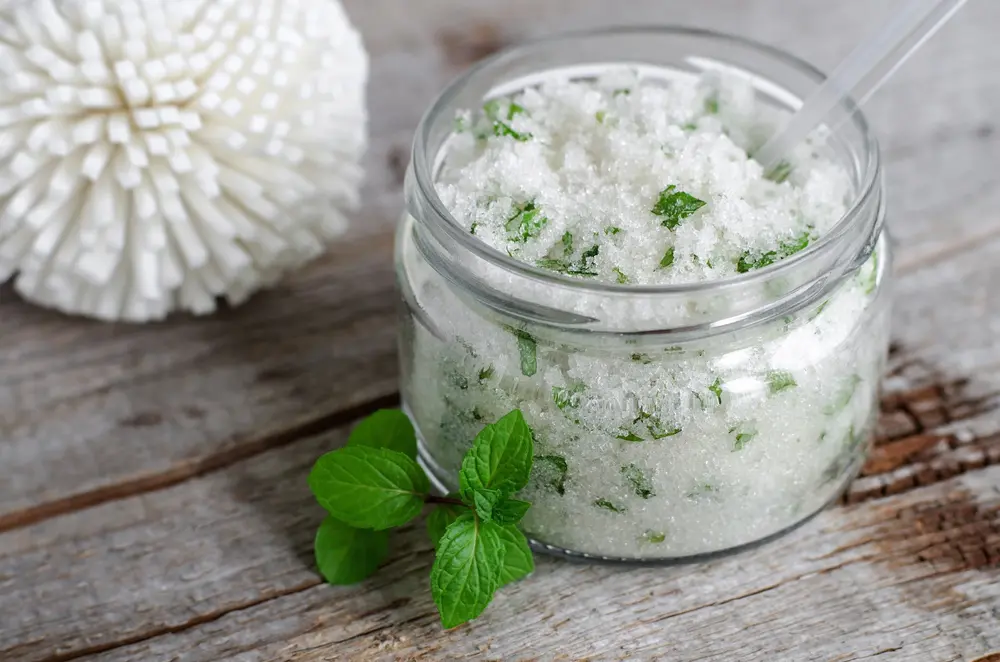
Some users with oily roots like clarifying scrubs that include mint. Peppermint is not a substitute for medicated anti-dandruff therapy when seborrheic dermatitis is present, but gentle exfoliation may improve product residue removal in selected routines.
Cosmetic appearance and shine
A few drops mixed into conditioner or applied sparingly to ends may add slip and shine. That can make hair look fuller in photos even when strand count is unchanged. The effect is styling-related, not medical density restoration.
Why peppermint routines feel like they work
Tingling is memorable. Massage increases relaxation. New routines often coincide with improved sleep or reduced heat styling. People attribute growth to the oil when multiple lifestyle factors changed at once. That does not mean peppermint did nothing. It means causality is hard to prove at home.
Specialists at Turkus Hair Transplant Clinic, Spain note: "Feeling a product work is not the same as measuring follicle recovery. Both experiences matter, but they should not be confused."
Side Effects and Risks
Essential oils are potent. Peppermint oil applied neat to the scalp can cause more harm than benefit, especially on sensitive or broken skin.
Irritation and burning
Menthol at high concentration may produce burning, redness, or prolonged tingling that crosses into discomfort. Inflammation from harsh application can worsen shedding temporarily.
Allergic reactions
Contact allergy to menthol or related compounds is possible. Signs include rash, swelling, blistering, or worsening itch after repeated use. Stop immediately and seek medical advice if symptoms spread.
Why dilution matters
Carrier oils such as jojoba, argan, or coconut oil reduce concentration. Even diluted formulas should stay away from eyes and broken skin. Children, pregnant individuals, and people with chronic scalp disease should consult a clinician before use.
Damage from overuse
Daily heavy oil layers can clog follicular openings, increase buildup on low porosity hair, and flatten roots. Mechanical damage from aggressive scrubbing can break hairs mid-shaft, mimicking density loss.
How to Use Peppermint Oil Safely
If you choose to experiment, treat peppermint oil as a concentrated additive, not a pure scalp flood. Safety steps reduce the risk of irritation and help you notice true tolerance over time.
Dilution ratios
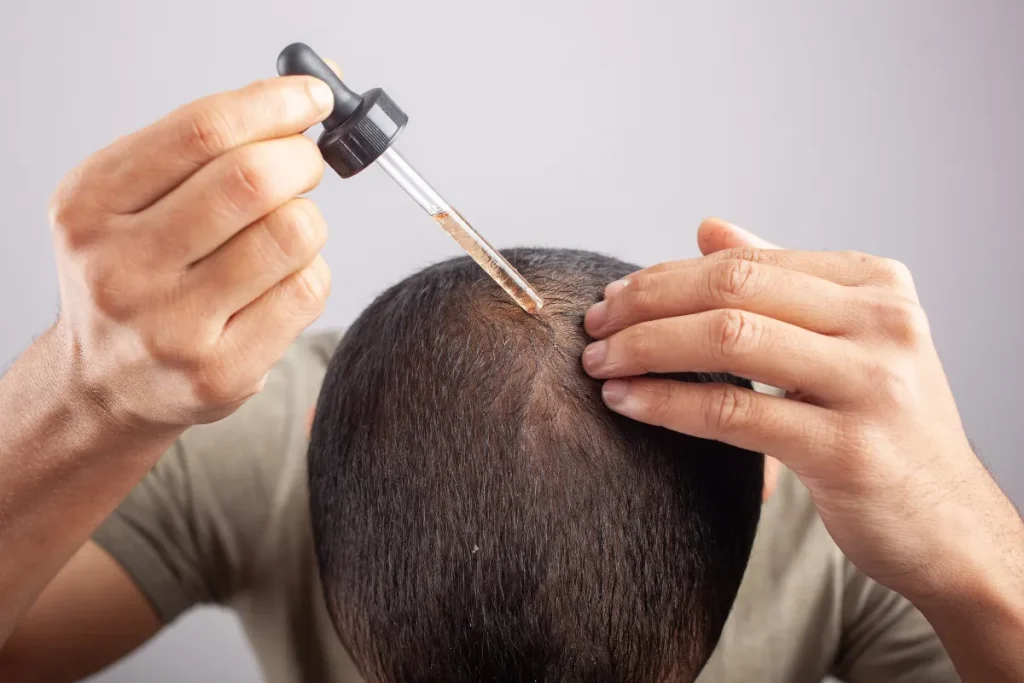
A common starting point in cosmetic guides is one to two drops of peppermint essential oil per tablespoon of carrier oil. Strength tolerance varies. Begin lower if your scalp is sensitive or if you rarely use essential oils.
Mixing with shampoo or conditioner
Add a single drop to a palm-sized amount of shampoo in your hand, not to the entire bottle at once. Lather gently, rinse fully, and avoid letting product run into eyes.
Frequency and timing
Once or twice weekly is enough for many people. Daily strong menthol exposure is rarely necessary and increases irritation risk. Morning application may feel refreshing; overnight occlusive oil layers can cause buildup on some scalps.
Patch testing
Apply a diluted dot behind the ear or on the inner forearm. Wait twenty-four to forty-eight hours. Proceed to the scalp only if no redness, swelling, or persistent itch appears.
Massage technique
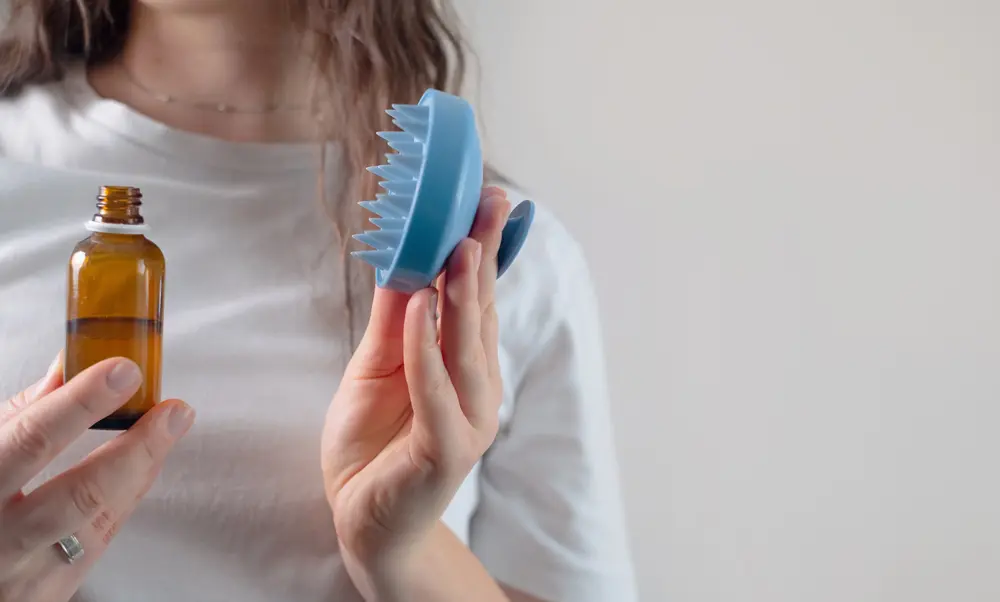
Use fingertips, not nails. Light circular motion for two to three minutes is sufficient. Tools with soft silicone bristles can help product spread, but excessive pressure damages follicles and shafts.
Specialists at Turkus Hair Transplant Clinic, Spain note: "Gentle technique protects existing hair. Aggressive scrubbing often creates the thinning appearance patients were trying to fix."
Peppermint Oil vs Rosemary Oil
Both oils appear in viral hair growth content. They are not interchangeable, though some routines combine them in heavily diluted blends.
Different active profiles
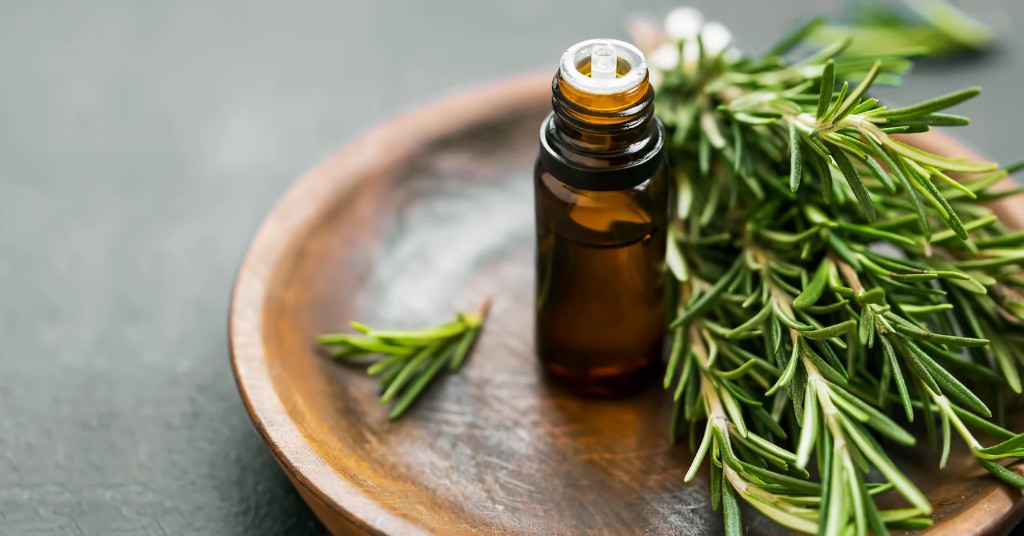
Peppermint is dominated by menthol and menthone, producing strong cooling. Rosemary oil contains camphor, cineole, and rosmarinic acid-related compounds with a warmer herbal profile. Sensory experience differs, and so may tolerance.
Evidence comparison
Rosemary oil has a small human study often cited for androgenetic alopecia comparison with minoxidil, still with limitations. Peppermint evidence is stronger in animal models than in people. Neither replaces medical diagnosis.
Choosing between them
If cooling helps your itch, peppermint may feel better. If you prefer herbal scent without intense menthol, rosemary may be easier to tolerate. Patch test each separately before combining.
Can Peppermint Oil Reverse Hair Loss?
For most patients with progressive pattern loss, peppermint oil should not be expected to reverse miniaturization. Cosmetic improvement is possible. Follicle-level recovery in androgenetic alopecia requires therapies with human evidence and monitoring.
Hair loss is not one condition
Telogen effluvium, alopecia areata, scarring alopecia, and androgenetic alopecia behave differently. Oils cannot diagnose which pattern you have. A trichologist can examine the scalp, review history, and recommend targeted next steps in Spain or via referral when needed.
Androgenetic alopecia complexity
In genetically susceptible individuals, follicles shrink under hormonal influence over years. Early miniaturized hairs may respond to medical therapy in selected patients. Advanced inactive follicles become harder to recover without surgical restoration.
Medical options that may help
Minoxidil may support follicle activity topically in suitable patients. Finasteride may slow DHT-related progression in many men after clinician review. Patients concerned about mood effects should read our guide on finasteride depression risks before starting or stopping medication.
PRP treatment may be discussed as a complementary option after individualized assessment. Techniques such as FUE and DHI may suit selected patients when medical stabilization and donor quality align with goals. Results vary; graft estimates require consultation.

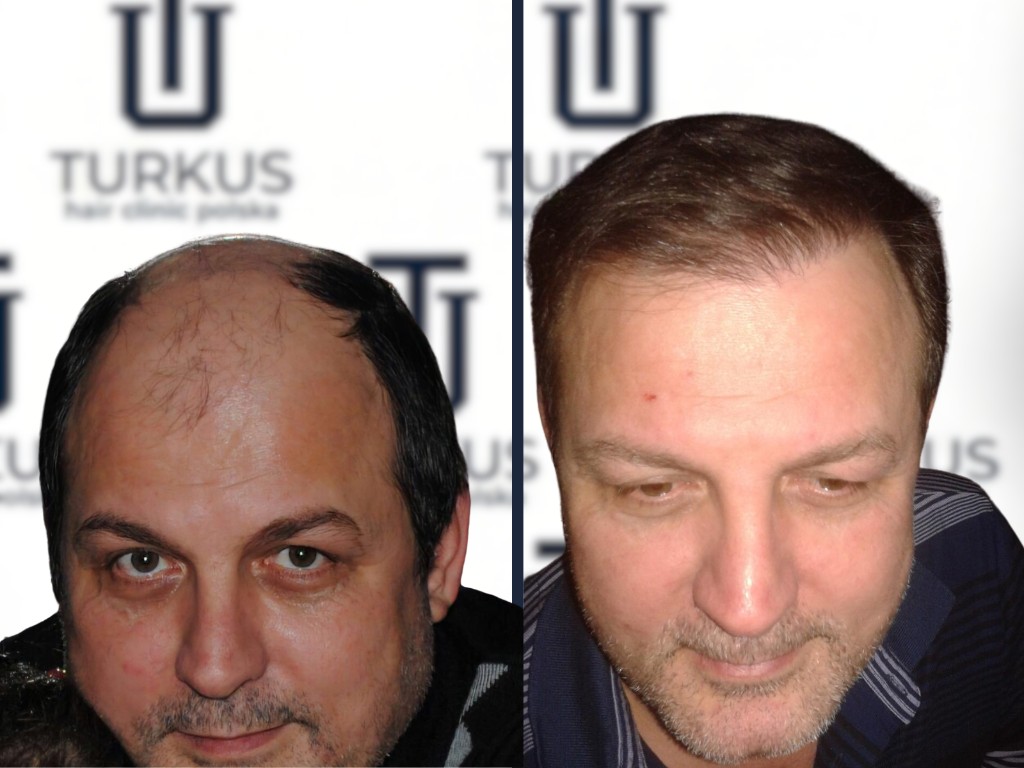
Specialists at Turkus Hair Transplant Clinic, Spain note: "Oils may be part of self-care. They rarely replace the need for diagnosis when recession is progressive or part lines keep widening."
Who Should Avoid Peppermint Oil on the Scalp?
- Infants, young children, and anyone unable to report irritation clearly
- Pregnant or breastfeeding individuals unless a clinician approves use
- People with active eczema, psoriasis flares, open wounds, or sunburned scalp
- Anyone with a known menthol or mint allergy
- Patients using prescribed scalp medications without checking interactions
- Individuals experiencing sudden patchy loss, scarring, or painful plaques
Sudden patchy shedding or scalp pain deserves prompt medical evaluation rather than essential oil experimentation. Early diagnosis protects time-sensitive treatment windows.
Why Choose Turkus Hair Transplant Clinic?
Turkus is a Turkish-led hair transplant clinic in Spain. Turkish surgical expertise is part of our team; your consultation, procedure planning, and aftercare stay local in Spain.
We focus on natural-looking results, clear communication, and personalized follow-up in Spain. We do not recommend traveling to Turkey instead of local care.
Options such as FUE, DHI, and Sapphire FUE may be suitable after evaluation. Results vary between patients; graft estimates require a consultation, not online guesses.
Specialists at Turkus Hair Transplant Clinic, Spain note: "The goal is an honest plan based on your pattern and goals, not promises that apply to every patient."
FAQs About Peppermint Oil for Hair
Does peppermint oil regrow hair?
It has not been proven to regrow hair in large human trials for androgenetic alopecia. A 2014 mouse study showed interesting signals, but human evidence remains limited.
How long does it take to see results?
Hair cycles span months. Any cosmetic change from oils may appear within weeks, while true density change from medical therapy usually requires longer consistent follow-up.
Can I apply peppermint oil directly to my scalp?
Undiluted essential oil increases irritation risk. Dilute with carrier oil, patch test first, and avoid eyes or broken skin.
Is peppermint oil better than minoxidil?
Minoxidil has stronger human clinical support for many patients with pattern loss. Peppermint oil is not an approved equivalent.
Can peppermint oil help dandruff?
It may feel refreshing, but persistent flaking or itch often needs proper diagnosis. Medicated therapy may be required for seborrheic dermatitis.
Is tingling a sign that hair is growing?
Tingling reflects menthol nerve activation. It is not reliable proof of follicle regrowth.
Can women use peppermint oil for thinning?
Some women use diluted routines for comfort, but hormonal or patterned thinning still deserves evaluation. Hormonal hair loss guides may help clarify symptoms.
How often should I use peppermint oil?
Many tolerate one to two applications weekly. Daily strong menthol exposure increases irritation risk for most scalps.
Can I mix peppermint and rosemary oils?
Some people combine heavily diluted drops. Test each oil separately first to identify allergy or irritation.
When should I book a consultation instead?
Book evaluation if you notice widening part lines, temple recession, crown thinning, patchy bald spots, or shedding that persists beyond three months.
Understand What Your Hair Loss Really Needs
Peppermint oil fits into many self-care routines. It can feel refreshing, may support scalp comfort, and sometimes improves cosmetic manageability. It has not been proven to reverse androgenetic alopecia or replace medical and surgical options when follicles are miniaturizing.
At Turkus Hair Transplant Clinic in Spain, the team evaluates whether your concern is breakage, temporary shedding, scalp disease, or progressive pattern loss. Turkish surgical expertise supports trust; consultation, planning, and aftercare stay local in Spain.
Specialists at Turkus Hair Transplant Clinic, Spain note: "The most helpful next step is clarity: learn what your scalp and follicles are actually doing before committing months to trends that may not match your diagnosis."
If you want thicker hair, worry about recession, or need honest guidance on FUE, DHI, PRP, or medical stabilization, request a free consultation and scalp assessment at Turkus. Results vary between patients; personalized evaluation is recommended before any plan.