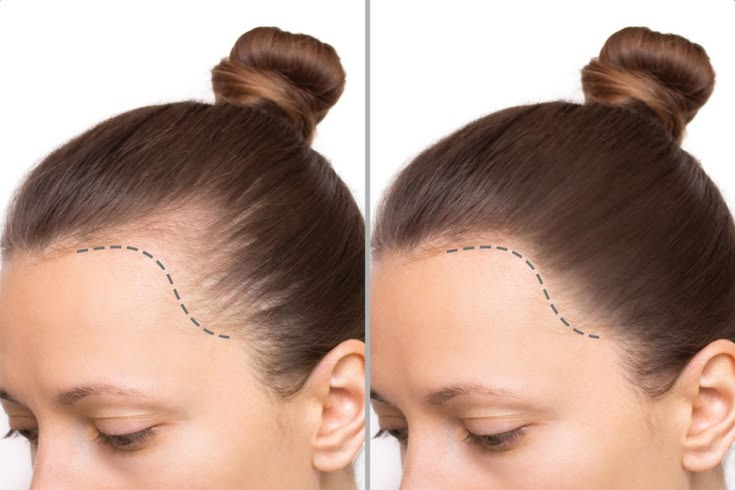
Temple thinning in women is one of the most confusing patterns in hair loss. The frontal corners may look sparser in photos. Ponytails may expose more scalp at the sides. Some women worry they are developing a male-style receding hairline, while others assume it is only aging or a high forehead. Mature vs receding assessment separates stable mature temples from progressive thinning that needs evaluation.
Female temple recession is real, but it often looks different from male pattern loss. It may appear alone at the temples, alongside diffuse thinning on top, or as part of female pattern hair loss (FPHL). Causes range from genetics and hormones to traction, stress, thyroid disease, PCOS, and scarring conditions such as frontal fibrosing alopecia (FFA).
The good news is that many cases can improve with the right diagnosis and treatment. Medical options, lifestyle changes, and in selected stable cases a female hair transplant may be suitable after consultation. Results vary between patients; no treatment guarantees full restoration for everyone.
At Turkus Hair Transplant Clinic in Spain, women often arrive after months of comparing old photos, unsure whether their temples are maturing, thinning, or receding. Clinical evaluation, pattern analysis, and honest planning matter more than guessing from the mirror alone.
Specialists at Turkus Hair Transplant Clinic, Spain note: "Women frequently ask whether temple thinning means they will look bald. The answer depends on the pattern, cause, and whether follicles are still active. We assess density, miniaturization, symmetry, and progression before recommending any plan."
Quick Insights
- Female temple thinning may be isolated, part of FPHL, or linked to traction, hormones, or scarring disease.
- It often looks softer than male recession and may not form a deep M-shaped hairline.
- Early signs include wider temple gaps in photos, more scalp at the sides when hair is pulled back, and finer hairs at the frontal edge.
- A naturally high forehead is not the same as active thinning; density behind the line matters.
- Ludwig and Sinclair scales help classify female pattern loss when central thinning is also present.
- Menopause, PCOS, thyroid problems, stress, and tight hairstyles are common contributing factors.
- Minoxidil, spironolactone, PRP, nutrition, and low-level laser therapy may help suitable patients after diagnosis.
- Female hair transplant with FUE or DHI may be an option when medical treatment is insufficient and the pattern is stable.
- Feminine hairline design and soft temple transitions are essential for natural results.
- A free consultation in Spain can clarify whether your temples need medical care, lifestyle changes, or surgical planning.
What Temple Hair Loss Looks Like in Women
Temple hair loss in women rarely matches the dramatic corners seen in many men. Instead, you may notice gradual widening at the sides of the forehead, finer hairs along the frontal edge, or less coverage when hair is worn up.
Some women see change only in bright bathroom light or in photos taken from above. Others notice ponytails and buns no longer cover the sides the way they used to. The pattern can be subtle for months before it feels obvious.
Common visual patterns
- Sparser hair at both temples with the center frontal edge relatively preserved
- More scalp visible when hair is slicked back or parted to the side
- Shorter, finer miniaturized hairs replacing thicker terminal hairs
- Asymmetry, with one temple appearing slightly more affected
- Diffuse thinning on the crown or mid-scalp in addition to temple change
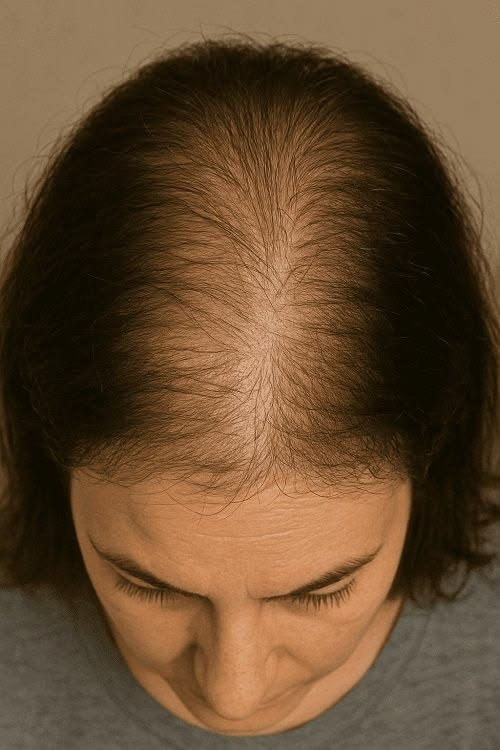
When central thinning is also present, the overall picture may fit female pattern hair loss rather than isolated temple recession. A widening part line and reduced volume on top often appear together.
How it differs from male temple recession
Male recession often produces deeper temporal corners and a more obvious M-shaped hairline over time. Women may keep a relatively intact central frontal edge while the sides thin. That difference matters for treatment and for hairline design if transplantation is ever considered.
Still, temple change in women should not be dismissed as cosmetic. Progressive miniaturization can continue without the dramatic shape seen in male androgenetic alopecia.
Specialists at Turkus Hair Transplant Clinic, Spain note: "Temple thinning in women is often underdiagnosed because the pattern looks milder than classic male recession. Close examination and photos usually reveal miniaturization earlier than patients expect."
Early Signs of Temple Thinning
Early temple thinning is easy to miss because change is gradual. Many women only recognize it when comparing photos from several years apart or when a familiar hairstyle stops providing the same coverage.
Signs to watch for
- More forehead visible at the temples in selfies and overhead photos
- Baby hairs at the temple edge look wispy instead of full
- Side parts expose scalp sooner than before
- Headbands, clips, and updos reveal sparse sides
- Shedding increases, but daily fall alone does not confirm pattern loss
- The same haircut looks flatter or less framed at the face
Tracking photos every three to six months in consistent lighting is more reliable than daily mirror checks. Mark the date and keep the same hairstyle and angle when possible.
When early change is still reversible
If follicles are miniaturizing but still active, medical treatment may slow progression and sometimes improve density. Telogen effluvium from stress or illness may also affect temples temporarily. In those cases, shedding often improves once the trigger resolves. A hair loss diagnosis visit helps separate temporary shedding from progressive pattern loss.
Aging vs Temple Recession
Not every temple change in women is pathological hair loss. Hair density naturally decreases somewhat with age. Hair shafts may become finer. Graying and texture shifts can make the scalp appear more visible even when follicle count has changed only modestly.
The key question is whether the pattern is stable or progressive. Aging-related thinning tends to be slow, diffuse, and relatively even. Active recession or FPHL often shows miniaturization, a widening part, or temple corners that look increasingly sparse year after year.
Mature hairline vs active loss
Some women naturally have a higher forehead or slightly more open temples without ongoing recession. That can resemble loss in photos but may be a lifelong trait. Mature vs receding assessment focuses on whether the line keeps moving, whether density behind the edge is dropping, and whether miniaturized hairs are multiplying.
A naturally high forehead may show more skin at the temples even when hair density is healthy. Thinning, by contrast, usually brings shorter, finer hairs and visible scalp at rest.
Specialists at Turkus Hair Transplant Clinic, Spain note: "Patients sometimes confuse a lifelong high forehead with new recession. We compare current photos with older ones and examine follicle quality at the temple edge, not forehead height alone."
High Forehead vs Temple Thinning
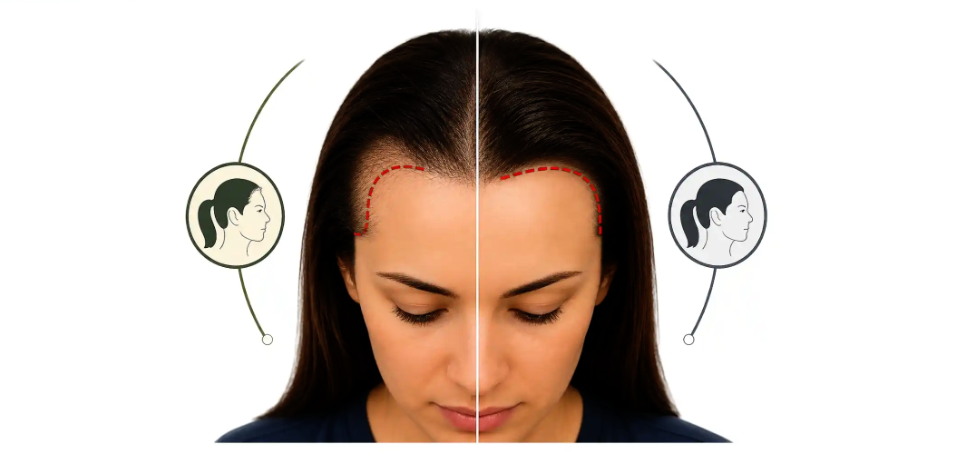
A high forehead refers to vertical forehead height and overall facial proportions. Temple thinning refers to reduced hair density at the temporal hairline. The two can coexist, which creates confusion in mirrors and photos.
How to tell them apart
- High forehead: stable outline for years, dense hairs at the temple margin, minimal miniaturization
- Temple thinning: increasing scalp show-through, wispy edge hairs, change visible in sequential photos
- High forehead: often family trait with similar shape in relatives
- Temple thinning: may coincide with widening part, crown changes, or hormonal symptoms
Hairstyles can camouflage both patterns temporarily. A specialist evaluation looks beyond styling tricks to follicle health and progression risk.
Female Temple Recession vs Female Pattern Hair Loss
Female pattern hair loss (FPHL), sometimes called female androgenetic alopecia, typically presents with widening of the central part and reduced density on the top of the scalp. Temple involvement may appear, but it is not always the leading feature.
Isolated temple recession in women is less common than diffuse central thinning, yet it happens. Some patients notice temple change first. Others see temples affected only after years of central thinning. Both scenarios need proper classification.
Isolated temple recession
When thinning is mainly at the temples with relatively preserved mid-scalp density, clinicians may consider localized androgen sensitivity, traction history, prior surgery or scars, or early FPHL limited to the frontal edge. Progression monitoring is important because the pattern may spread over time.
Temple change as part of FPHL
When temples thin together with a widening part and crown volume loss, FPHL is more likely. Treatment often targets the whole pattern, not only the sides. Oral and topical therapies, PRP, and lifestyle changes may be discussed before any surgical option.
Understanding the Ludwig Scale
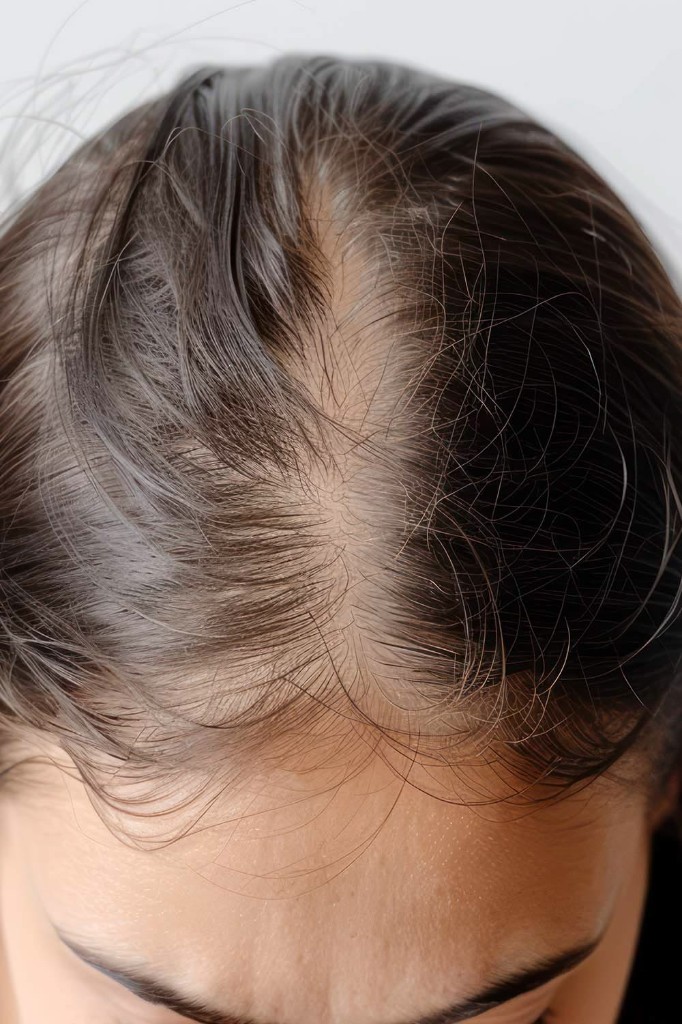
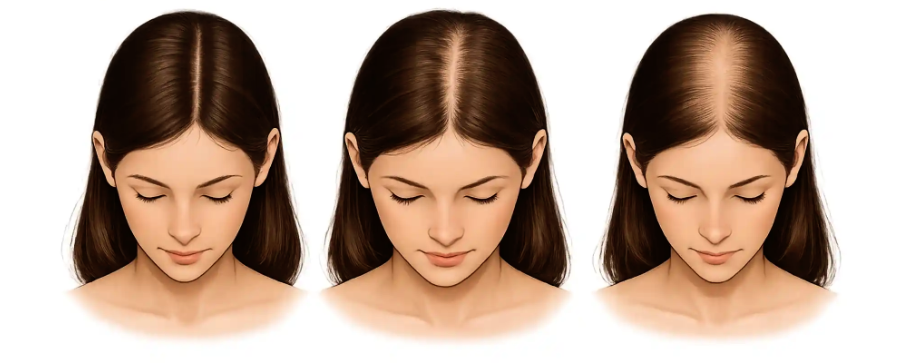
The Ludwig scale classifies female pattern hair loss by severity of central thinning. Stage 1 shows mild widening of the part. Stage 2 shows more obvious rarefaction on the top. Stage 3 indicates extensive central thinning with preserved fringe in many cases.
Ludwig staging helps communicate severity and track progression. It does not replace clinical examination, but it gives patients and clinicians a shared language.
How Ludwig relates to temples
Ludwig focuses on the crown and mid-scalp, not the temples specifically. A woman may have mild Ludwig stage 1 central change with noticeable temple thinning, or significant central loss with relatively stable temples. That is why photos, trichoscopy, and history matter alongside staging.
The Sinclair Scale
The Sinclair scale is another tool for grading female pattern hair loss, often using a midline part photograph. It ranges from normal density to advanced rarefaction along the part line.
Like Ludwig, Sinclair emphasizes central scalp change. It can be useful for monitoring treatment response over time when photos are taken consistently.
Why two scales exist
Different clinics and studies prefer different systems. What matters for you is not the label but whether density is stable, whether miniaturization is active, and which treatments match your pattern. A specialist can explain where you fall on these scales and what that means for prognosis.
Why Women Usually Do Not Get a Deep M-Shaped Hairline
The M-shaped hairline is a classic male pattern. Women may develop temporal thinning, but the frontal edge often remains softer and less angular. Deep temple corners with a sharp central point are uncommon in female pattern loss.
When a woman appears to develop a strong M-shaped hairline, clinicians consider whether the pattern is truly androgenetic, whether traction or styling contributed, or whether a scarring condition such as FFA is affecting the frontal hairline.
What women more often see instead
- Gradual widening at the temples without a sharp central point
- Diffuse thinning on top with a widening part
- Finer hairs along the frontal edge rather than bare corners
- Loss of density behind the hairline, not only along the outline
That is why treatment and hairline design for women should not copy male templates. Feminine framing requires softer transitions and realistic density goals.
Specialists at Turkus Hair Transplant Clinic, Spain note: "We avoid designing female temples like a male hairline. The goal is balance with face shape and age, not the lowest possible line."
Causes of Female Temple Hair Loss
Genetics and hormone sensitivity
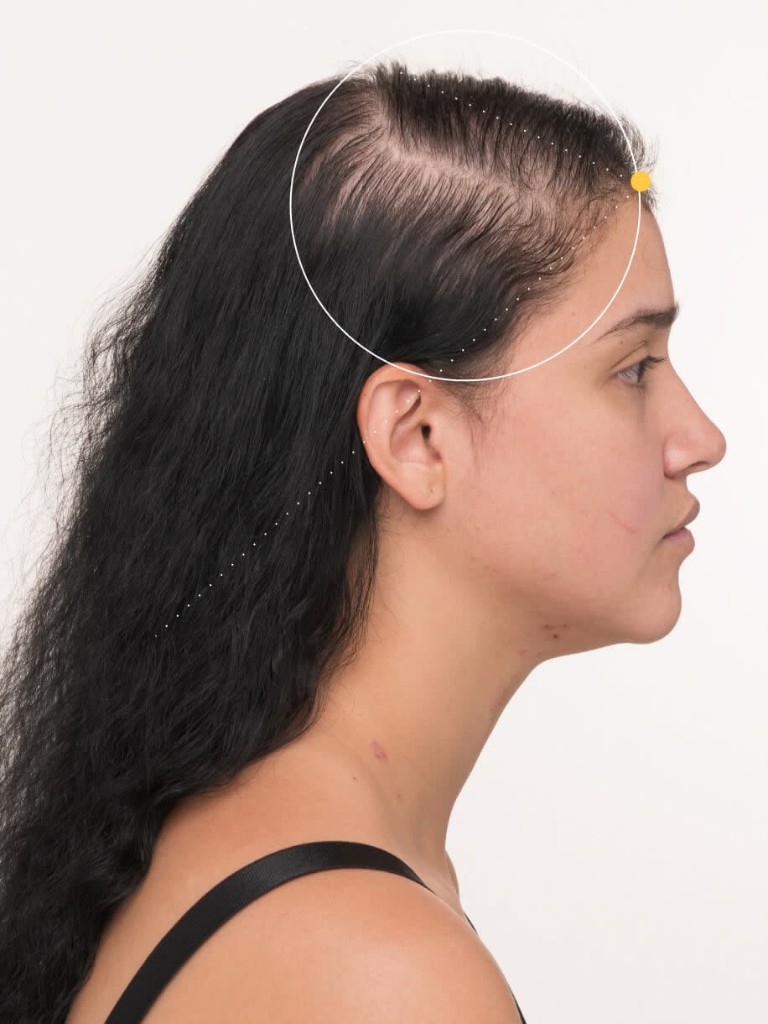
Family history of female or male pattern loss increases risk. Follicles at the temples and crown may be sensitive to androgens even when blood tests look normal. Miniaturization can progress slowly over years.
Menopause and perimenopause
Declining estrogen and relative androgen influence during perimenopause and menopause may worsen thinning along the part and temples in susceptible women. Symptoms such as hot flashes, cycle changes, and sleep disruption sometimes accompany hair changes.
PCOS and androgen excess
Polycystic ovary syndrome can raise androgen levels and contribute to temple thinning, acne, irregular cycles, and excess hair growth elsewhere. Endocrine evaluation may be appropriate when PCOS is suspected.
Thyroid disease and nutrition
Hypothyroidism and hyperthyroidism may cause diffuse shedding that also affects the temples. Iron deficiency, low vitamin D, zinc imbalance, and rapid weight loss can compound the problem. Labs and dietary history help identify correctable factors.
Stress and telogen effluvium
Major stress, illness, surgery, or emotional trauma can push hairs into the resting phase. Shedding often appears two to three months later and may involve the whole scalp, including temples. Stress and hair loss evaluation helps determine whether shedding is temporary or unmasks underlying pattern loss.
Traction and styling habits
Tight ponytails, buns, braids, extensions, and frequent pulling at the hairline can cause traction alopecia. Temples and the frontal edge are vulnerable when tension is repeated over years. Changing hairstyle early can preserve follicles.
Frontal fibrosing alopecia (FFA)
FFA is a scarring alopecia that can affect postmenopausal women. It may cause progressive loss along the frontal hairline and temples, sometimes with eyebrow thinning, scalp itch, or redness. Early diagnosis is critical because scarring can permanently destroy follicles.
Specialists at Turkus Hair Transplant Clinic, Spain note: "Temple thinning is not always genetic pattern loss. We ask about hormones, styling, medications, and symptoms such as itching or burning because scarring and traction alopecia need different care."
How Doctors Diagnose Temple Thinning
Diagnosis begins with history: when changes started, whether they are progressive, family history, cycles, menopause, medications, diet, and styling habits. A scalp examination follows, often with dermoscopy or trichoscopy to assess miniaturization, inflammation, and scarring.
Tests that may be ordered
- Thyroid function tests
- Iron studies and vitamin D when deficiency is suspected
- Hormone panel if PCOS or androgen excess is possible
- Scalp biopsy in unclear or scarring cases
- Photography for progression tracking
A hair loss diagnosis is not only about labels. It defines whether follicles are still viable, whether inflammation is active, and which treatments are worth trying first.
Can Temple Hair Grow Back?
Regrowth depends on cause and follicle health. Telogen effluvium often improves after the trigger resolves. Early miniaturization from FPHL may partially recover with consistent medical treatment, though results vary and consultation is recommended.
Long-standing bald areas with smooth skin and lost follicular openings are less likely to regrow fully without transplantation. Scarring alopecia requires anti-inflammatory treatment to protect remaining hairs; lost scarred follicles generally do not return.
Realistic expectations
Improvement may mean slower progression, thicker existing hairs, or visible filling of thin zones. Complete restoration to teenage density is not realistic for every patient. Honest goals protect you from disappointment and from chasing ineffective products.
Treatment Options for Female Temple Thinning
Treatment should match diagnosis. A plan for traction alopecia starts with loosening hairstyles. FFA needs medical anti-inflammatory care. FPHL may combine topical therapy, oral medication, procedures, and lifestyle support.
Topical minoxidil
Topical minoxidil is widely used for female pattern loss. It may increase hair thickness and slow shedding in suitable patients. Consistency matters; results take months. Scalp irritation can occur. Discuss formulation and strength with your clinician.
Oral minoxidil
Low-dose oral minoxidil is increasingly prescribed off-label for some women who do not tolerate or respond to topical forms. Blood pressure and heart rate monitoring may be needed. It is not appropriate for everyone.
Spironolactone and anti-androgen therapy
Spironolactone may reduce androgen-driven miniaturization in selected women, especially when PCOS or hormonal imbalance is present. Pregnancy must be avoided during use. Potassium monitoring and clinician supervision are required.
PRP therapy
Platelet-rich plasma injections may support follicle function in some patients with thinning temples or central loss. Evidence is evolving. PRP treatment is often combined with medical therapy rather than used alone. Multiple sessions are typical; results vary.
Low-level laser therapy (LLLT)
LLLT devices may stimulate follicle activity in mild to moderate pattern loss for some patients. Compliance with regular use is essential. LLLT is usually adjunctive, not a standalone cure.
Microneedling
Scalp microneedling may enhance topical absorption and follicle signaling in some protocols. It should be performed with appropriate depth and hygiene. Home devices carry irritation and infection risk if misused.
Nutrition and lifestyle
Balanced protein intake, correction of iron or vitamin D deficiency, stress management, gentle hair care, and avoiding tight styles support any medical plan. Supplements help when a deficiency is documented, not as a universal fix.
Specialists at Turkus Hair Transplant Clinic, Spain note: "We usually start with the least invasive options that fit the diagnosis. Surgery enters the conversation only when medical therapy has been considered and the pattern is stable enough to plan graft placement."
When Hair Transplant May Be Suitable
Female hair transplant may be appropriate when temples remain thin despite adequate medical treatment, when follicles in the donor area are strong, and when expectations are realistic. Surgery does not stop underlying progressive loss; ongoing medical care may still be needed.
Stable patterns with limited active inflammation are better candidates than rapidly changing or scarring disease without control. A consultation clarifies whether grafts can improve framing without creating an unnatural edge.
Who may benefit
- Women with stable temple thinning and good donor density
- Patients seeking softer temple framing after medical stabilization
- Selected cases of traction alopecia with reduced but viable recipient area
- Women who understand that density goals must match donor supply
Who may need to wait
- Active FFA or unexplained scarring without treatment
- Uncontrolled shedding from telogen effluvium
- Unrealistic expectations of full density restoration
- Very diffuse unpatterned loss with weak donor area
FUE vs DHI for Women
FUE removes individual grafts from the donor area and places them into thinning zones. DHI uses an implanter pen for direct insertion, which may suit certain hairline and temple cases where angle and direction control matter.
Neither technique guarantees a result. The choice depends on graft quality, surgeon experience, recipient characteristics, and whether shaving part of the donor or recipient area is acceptable. FUE vs DHI comparison should happen during an in-person plan, not from online marketing alone.
Practical differences for female patients
Many women prefer techniques that allow partial shaving or strategic coverage of the donor zone. Temple restoration often needs single-hair grafts at the leading edge and careful direction toward the face. Technique matters less than design and execution.
Feminine Hairline and Temple Design
Hairline design for women should preserve softness. The leading edge is often irregular and rounded, not straight. Temple transitions should blend into side hair without sharp corners.
Hairline design planning considers forehead height, face shape, age, ethnic hair characteristics, future loss risk, and donor capacity. Lowering a hairline aggressively may look unnatural later, especially if central thinning progresses.
Design principles for temple restoration
- Single-hair grafts at the frontal edge for softness
- Natural asymmetry rather than mirror-perfect lines
- Direction of growth aligned with previous temple flow
- Conservative density goals when donor is limited
- Coordination with medical therapy for long-term stability
Specialists at Turkus Hair Transplant Clinic, Spain note: "The best female temple result often looks like the patient at her best earlier years, not like a different person with a new hairline stamp."
What Not to Do
- Do not assume temple change is only aging and delay evaluation for years
- Do not copy male hair loss advice or M-shaped hairline photos as your template
- Do not rely on tight buns or traction styles to hide thinning daily
- Do not start strong medications without supervision because a friend had success
- Do not choose surgery abroad based on price alone without a clear diagnosis
- Do not expect guaranteed full density from any single treatment
Aggressive home remedies, excessive supplements without labs, and repeated chemical treatments can irritate the scalp and worsen shedding. Gentle care supports professional treatment; it does not replace it.
When to See a Hair Specialist
Book evaluation if temple thinning is progressive, if you notice widening part lines, if shedding persists more than three months, or if you have itching, burning, redness, or eyebrow loss at the frontal hairline.
Prepare for your visit
- Bring dated photos from the last several years
- List medications, supplements, and hormonal history
- Note hairstyle habits that pull at the temples
- Write down questions about medical vs surgical options
- Ask what progression would look like without treatment
Early specialist input protects remaining follicles, especially when scarring alopecia is possible. Waiting until the temples look bare limits options.
Why Choose Turkus Hair Transplant Clinic?
Turkus is a Turkish-led hair transplant clinic in Spain. Turkish surgical expertise is part of our team; your consultation, procedure planning, and aftercare stay local in Spain.
We focus on natural-looking results, clear communication, and personalized follow-up in Spain. We do not recommend traveling to Turkey instead of local care.
Options such as FUE, DHI, and Sapphire FUE may be suitable after evaluation. Results vary between patients; graft estimates require a consultation, not online guesses.
Specialists at Turkus Hair Transplant Clinic, Spain note: "The goal is an honest plan based on your pattern and goals, not promises that apply to every patient."
Frequently Asked Questions
Is temple thinning common in women?
Yes. Temple involvement can occur with female pattern hair loss, traction, hormonal shifts, or other conditions. It is often less dramatic than male temple recession but still distressing.
Does temple thinning mean I will go bald?
Not necessarily. Progression depends on cause, genetics, and treatment. Many women stabilize with medical care. Consultation helps estimate your individual risk.
Can stress cause temple hair loss?
Stress may trigger telogen effluvium, which can thin the temples temporarily. Chronic stress can also worsen underlying pattern loss. Stress management helps, but diagnosis is still important.
Is a widening part related to temple thinning?
Often yes. Both can be features of female pattern hair loss. Some women see part widening first; others notice temples first.
Will minoxidil work on my temples?
It may help some patients with active miniaturization. Results vary and take months. It is not effective for scarred bald skin without viable follicles.
When is female hair transplant appropriate for temples?
When medical treatment has been considered, the pattern is relatively stable, donor hair is adequate, and goals focus on natural framing rather than maximum density.
Is FFA the same as female pattern hair loss?
No. FFA is a scarring inflammatory condition that can destroy follicles permanently. It needs prompt medical treatment, not only cosmetic camouflage.
Can tight ponytails cause temple recession?
Yes. Repeated tension may cause traction alopecia at the hairline and temples. Loosening styles early can allow recovery if follicles are not scarred.
How long before I see treatment results?
Topical and oral therapies often need three to six months or longer for visible change. PRP and laser therapies also require consistent sessions. Patience and photo tracking help.
Should I worry about an M-shaped hairline as a woman?
A mild temporal shape can be normal. A deepening M-shaped hairline with miniaturization deserves evaluation to rule out progressive loss or scarring conditions.
Restore Confidence at Your Temples
Female temple thinning can feel isolating because most public examples focus on male recession. Your pattern may be subtler, but it still deserves accurate diagnosis and a plan that fits your face, lifestyle, and goals.
At Turkus Hair Transplant Clinic in Spain, consultations combine medical assessment with honest discussion of FUE, DHI, PRP, and non-surgical options when appropriate. Turkish surgical expertise supports quality; your care stays local in Spain. Results vary; personalized consultation is recommended.
Specialists at Turkus Hair Transplant Clinic, Spain note: "Bring photos, your hairstyle history, and your goals. We will tell you what is realistic for your temples before any treatment begins."
Book a free consultation in Spain to understand why your temples are changing and which steps may help protect and restore your hairline.