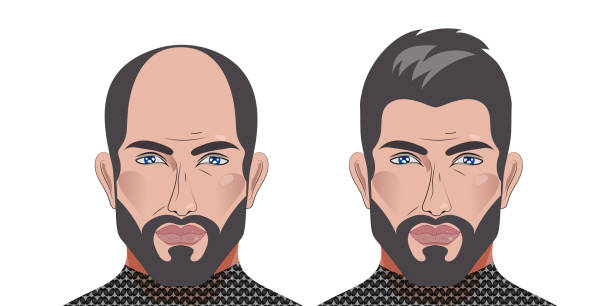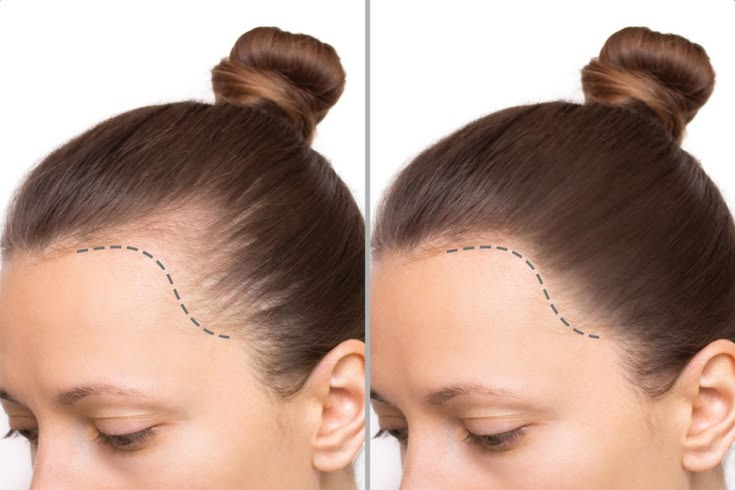
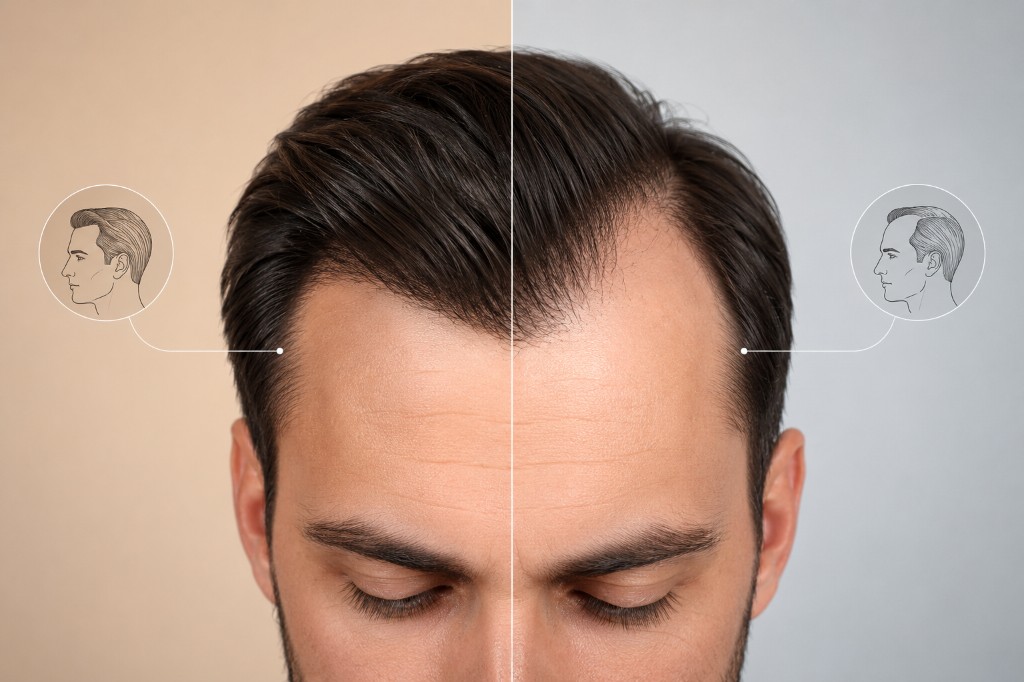
Is my hairline maturing or receding? That question appears in search results millions of times because the two patterns can look surprisingly similar in the mirror. Both may involve temple movement. Both may create a wider forehead in photos. Both may trigger the same anxiety when an old hairstyle stops working the same way.
The difference is not always obvious at first glance. A mature hairline often stabilizes after modest change during young adulthood. A receding hairline usually keeps moving, with thinning density and miniaturized hairs behind the frontal edge over time.
According to the American Academy of Dermatology, male pattern hair loss commonly begins with temple recession and frontal changes linked to follicular miniaturization. Normal maturation, however, can also involve subtle temple definition without progressive baldness.
Many men compare Norwood charts, family photos, and social media examples before understanding what their own pattern actually means. That confusion is normal. The goal is not panic. The goal is accurate interpretation.
At Turkus Hair Transplant Clinic in Spain, patients often arrive after months of mirror checking, convinced they are balding because their temples look sharper than before. Sometimes the pattern is stable and mature. Other times early androgenetic alopecia is already progressing. Clinical evaluation separates the two.
Specialists at Turkus Hair Transplant Clinic, Spain note: "Patients frequently ask whether their hairline looks normal. We look at progression over time, density behind the frontal line, miniaturization, and crown involvement rather than shape alone."
This guide explains what a mature hairline looks like, what defines a receding hairline, how to tell the difference, how Norwood stage 2 fits in, common causes, treatment options, when transplantation may be appropriate, and when to see a specialist. Hairline changes rarely follow identical timelines. Understanding progression matters more than labeling the shape.
Quick Insights
- A mature hairline often stabilizes in the late teens or twenties.
- A receding hairline usually continues moving with thinning density.
- Temple shape alone does not confirm baldness.
- Miniaturized hairs behind the frontal edge suggest active loss.
- Crown thinning alongside temple change deserves closer evaluation.
- Minoxidil and finasteride may help stabilize progression in suitable patients.
- Hair transplantation requires donor planning and natural design.
- Photo tracking every few months is more reliable than daily mirror panic.
What Is a Mature Hairline?
A mature hairline describes a natural shift in the frontal hairline position that many men experience during young adulthood. It is not the same as progressive hair loss, though the visual difference can be subtle.
Typically, the hairline moves slightly upward from its teenage position. Temple corners may appear slightly more defined. The overall shape may resemble a mild M-shaped hairline without deep recession or visible thinning behind the frontal edge.
What does a mature hairline look like?
- Slight elevation compared with the teenage hairline
- Relatively symmetrical temple corners
- Stable position for years after initial change
- Dense hair behind the frontal edge
- No progressive widening of the forehead over time
The mature pattern often settles into a stable frame for the face. Hairstyles may need minor adjustment, but the underlying density usually remains strong.
At what age does a mature hairline develop?
Most men notice maturation between the late teens and early thirties. Some see subtle change earlier. Others maintain a lower teenage hairline longer. Age alone does not diagnose recession. Stability over time matters more.
According to trichology literature summarized in the International Journal of Trichology, frontal hairline maturation is a recognized developmental pattern distinct from androgenetic alopecia when density remains preserved.
Is a mature hairline balding?
Usually no. A mature hairline reflects normal variation, not necessarily progressive baldness. The key distinction is whether recession continues, density drops behind the line, miniaturized hairs appear, or crown thinning develops.
An M-shaped hairline can be completely normal when progression stops and density remains strong. Shape creates confusion. Progression reveals the diagnosis.
Specialists at Turkus Hair Transplant Clinic, Spain note: "Many patients assume any temple movement equals hair loss. A stable mature pattern may look different from adolescence without continuing to recede."
What Is a Receding Hairline?
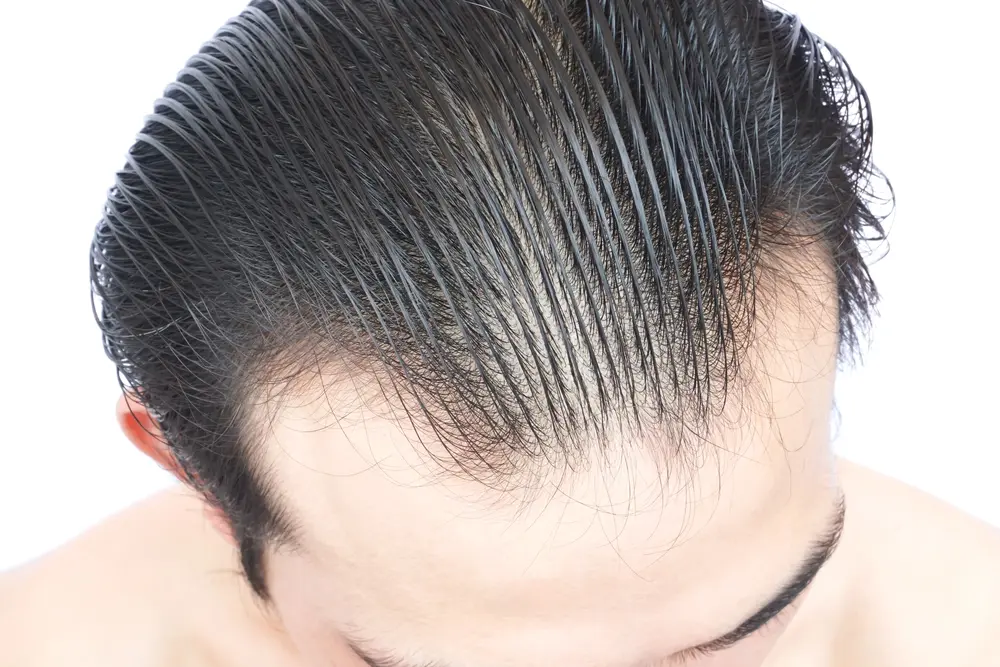
A receding hairline describes progressive backward movement of the frontal hairline, usually with reduced density, miniaturization, or both. It is commonly associated with androgenetic alopecia, though other conditions may mimic recession in some cases.
What are the first signs of recession?
- Temple corners moving backward over months or years
- Widening forehead appearance in photos
- Fine miniaturized hairs behind the frontal edge
- Reduced density when hair is wet or parted
- Difficulty styling the same way as before
Early recession is easy to miss because change happens gradually. Many men only notice the difference when comparing photos from several years earlier.
Why do temples recede first?
Temple follicles are often more sensitive to DHT in genetically susceptible individuals. Over time, affected follicles miniaturize. Hairs become thinner, shorter, and weaker. This frequently begins at the temporal corners before spreading across the frontal scalp or toward the crown.
According to StatPearls guidance on androgenetic alopecia, bitemporal recession is a classic early presentation in men. The process is biological and usually progressive unless stabilized.
Can recession start in your twenties?
Yes. Some men notice temple movement in their late teens or early twenties. Others maintain stability for decades. Genetics, family history, and hormonal sensitivity influence timing heavily. Early change does not automatically mean advanced baldness, but it deserves monitoring.
Specialists at Turkus Hair Transplant Clinic, Spain note: "Recession in the twenties alarms many patients, yet progression speed varies enormously. Early evaluation focuses on whether follicles are actively miniaturizing."
Key Differences Between Mature and Receding Hairlines
The most useful comparison is not shape alone. It is stability, density, and direction of change over time. The following contrasts help separate normal maturation from progressive loss.
Mature hairline characteristics
- Stabilizes after initial modest movement
- Dense hair behind the frontal edge
- Minimal or no miniaturized hairs
- Forehead width stays relatively constant for years
- Often symmetrical temple corners
- No progressive crown thinning linked to the pattern
Receding hairline characteristics
- Continues moving backward over time
- Thinning or reduced density behind the line
- Miniaturized short hairs visible on close inspection
- Widening forehead in standardized photos
- Possible M-shaped hairline with deepening corners
- Crown thinning may appear alongside temple change
Comparison at a glance
- Mature: stable for years. Receding: progressive movement.
- Mature: strong density behind the edge. Receding: thinning or miniaturization.
- Mature: normal developmental shift. Receding: often androgenetic alopecia.
- Mature: cosmetic adjustment only. Receding: may need medical or surgical planning.
- Mature: family history less predictive alone. Receding: strong family history raises concern.
If you are unsure, compare dry hair photos under similar lighting every three to six months. Stability over years suggests maturation. Gradual backward movement suggests recession.
Specialists at Turkus Hair Transplant Clinic, Spain note: "The mistake is diagnosing based on shape instead of change. A mature hairline may look different from adolescence without continuing to move."
How Can You Tell If Your Hairline Is Maturing or Receding?

Daily mirror checking often increases anxiety more than accuracy. Lighting, wet versus dry hair, and styling products all change perception. A structured approach works better. Soft sideburn styles around the temples can improve facial balance even when the hairline itself has changed.
Use standardized photos
- Same lighting and angle each time
- Dry hair pulled back from the temples
- Front and top views if possible
- Compare every three to six months
- Avoid judging from a single bad photo day
Memory becomes unreliable with gradual change. Photo archives reveal progression that daily observation misses.
Check density behind the hairline
Look closely at hairs behind the frontal edge, not only the line itself. Thick consistent hair suggests stability. Short fine hairs, visible scalp under parting, or reduced volume suggest miniaturization linked to active androgenetic alopecia.
Related reading: how to get thicker hair when density and strand quality both feel reduced.
Does crown thinning matter?
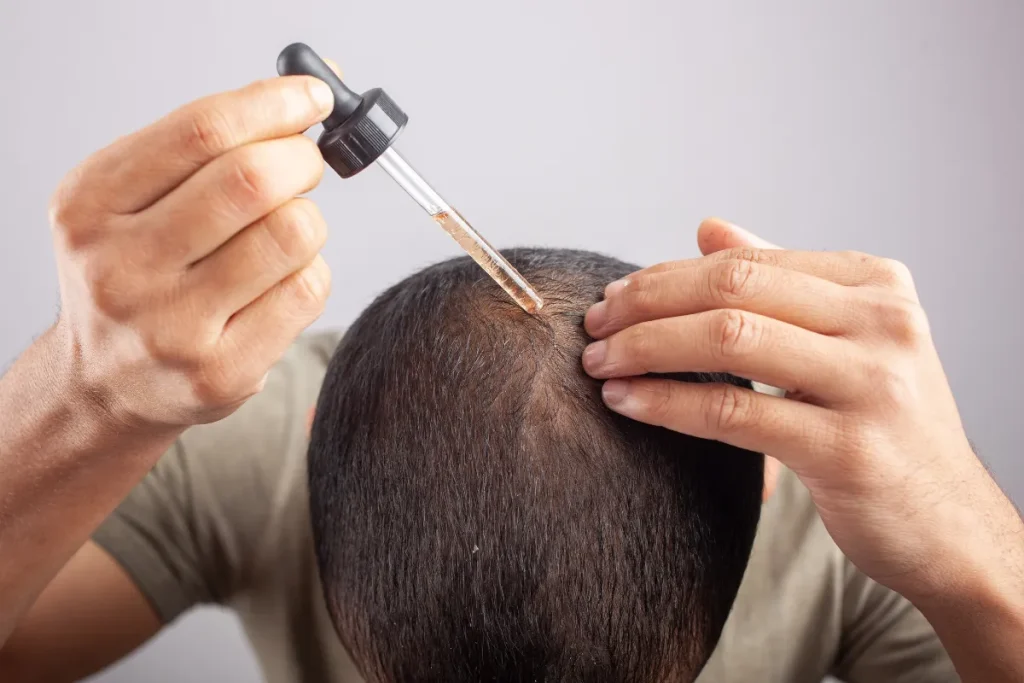
Yes. Isolated mild temple definition may fit a mature pattern. Temple recession plus crown thinning, however, raises stronger suspicion for progressive male pattern hair loss. Both areas are evaluated together during consultation.
Track changes over time
No change for two or more years after initial shift often supports a mature interpretation. Gradual backward movement, increasing scalp visibility, or spreading miniaturization suggests recession deserving professional assessment.
Specialists at Turkus Hair Transplant Clinic, Spain note: "We rarely label a hairline based on one appointment alone. Progression history, density mapping, and miniaturization patterns matter more than a single frontal photograph."
Mature Hairline vs Norwood Stage 2
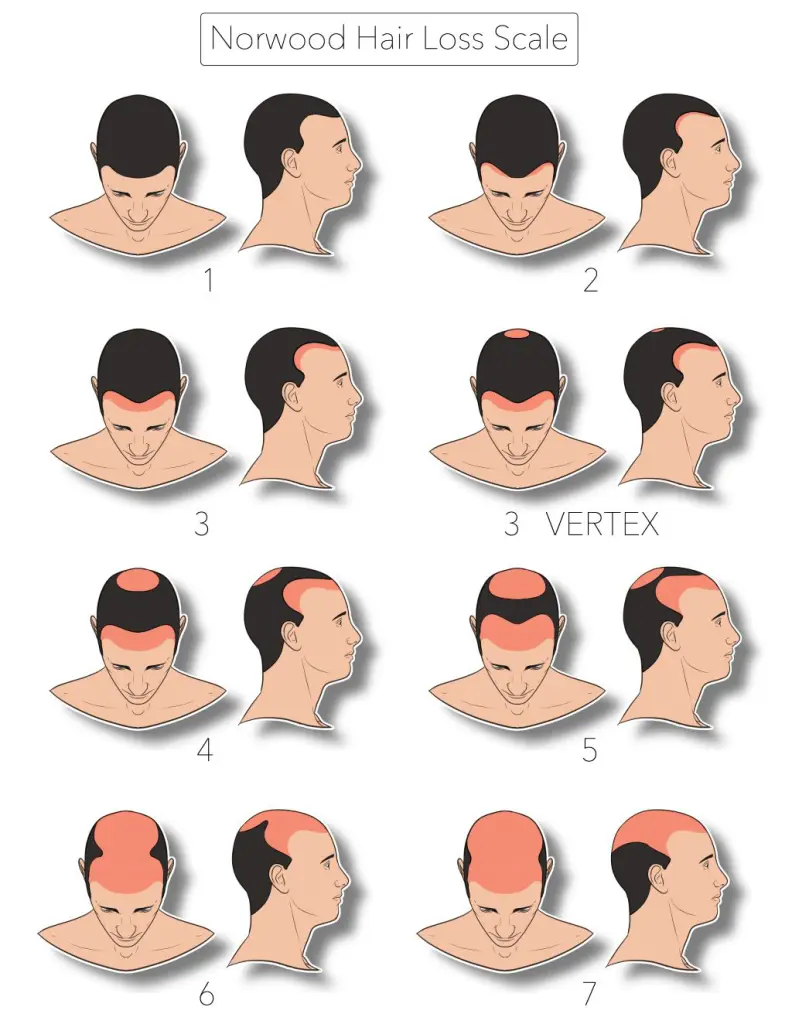
Norwood stage 2 on the classification scale often shows slight bitemporal recession. Visually, this can resemble a mature hairline. That overlap creates enormous online confusion.
When Norwood 2 may be normal maturation
If temple movement stabilizes, density behind the frontal line remains strong, no miniaturized hairs accumulate, and crown density stays stable, the pattern may represent maturation rather than active progression. Some men remain at this appearance for decades.
When Norwood 2 suggests active loss
- Continued temple deepening over time
- Miniaturized hairs behind the frontal edge
- Widening forehead in sequential photos
- Crown thinning developing alongside temples
- Strong family history of progressive baldness
According to the British Association of Dermatologists, androgenetic alopecia progression varies significantly between individuals. Norwood numbers describe appearance, not guaranteed future outcome.
Specialists at Turkus Hair Transplant Clinic, Spain note: "Norwood stage 2 is not a diagnosis by itself. Stability, miniaturization, and crown status determine whether the pattern is mature or actively progressing."
What Causes a Receding Hairline?
Most receding hairlines relate to genetics and follicle sensitivity to hormones. Still, patients often search for simpler explanations first: stress, shampoo, hats, or styling habits. Those factors may affect shedding temporarily but rarely create classic progressive temple recession alone.
Genetics and DHT sensitivity
Androgenetic alopecia remains the most common cause of receding hairlines in men. Genetically susceptible follicles respond to DHT by shortening growth cycles and miniaturizing over time. Temples and crown are frequently affected first.
Related reading: hormonal hair loss causes and symptoms when pattern, timing, and family history suggest hormone-linked thinning.
Can stress cause recession?
Stress may trigger telogen effluvium, a temporary diffuse shedding condition. Classic temple recession with progressive miniaturization, however, usually follows androgenetic patterns rather than stress alone.
See our guide on stress and hair loss for how temporary shedding differs from patterned recession.
Lifestyle and scalp health
Smoking, poor sleep, harsh chemical processing, and chronic scalp inflammation may worsen hair quality or shedding in some individuals. They rarely explain deep progressive temple recession without underlying genetic sensitivity. Still, reducing damage supports overall follicle health.
Specialists at Turkus Hair Transplant Clinic, Spain note: "Patients often want one simple cause. Genetic sensitivity, hormonal influence, and long-term progression usually interact gradually over many years."
Can You Stop a Receding Hairline?
Complete reversal is not guaranteed, but progression may be slowed or stabilized in many patients. Early intervention usually preserves more options than waiting until recession becomes advanced.
Minoxidil for hairline recession
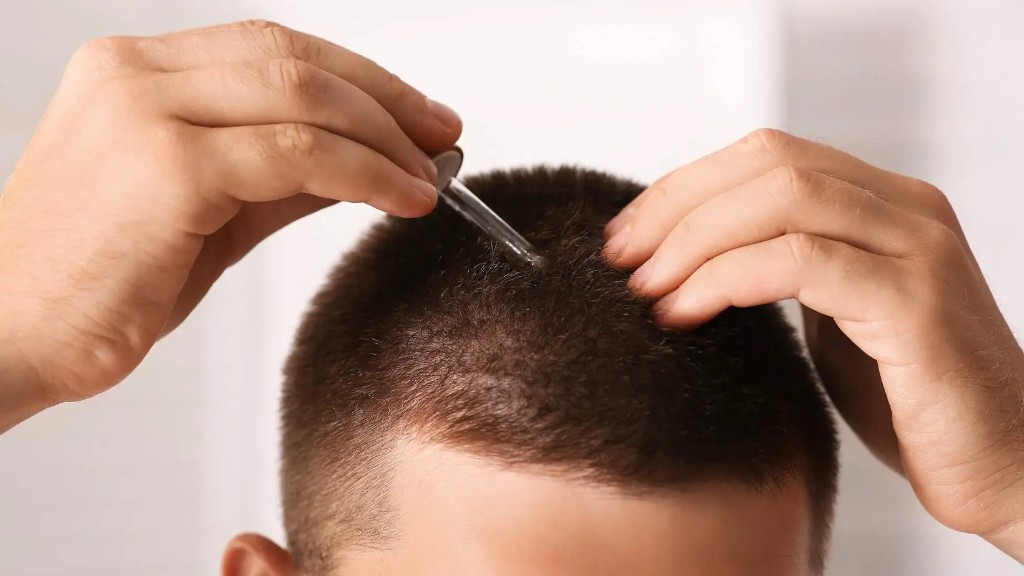
Minoxidil may help extend growth phases, strengthen miniaturized hairs, and reduce visible thinning gradually in suitable patients. Results vary depending on progression stage and consistency. It is not a guaranteed cure for every pattern.
According to FDA materials on hair loss treatments, minoxidil remains one of the approved therapies commonly used for androgenetic alopecia management.
Finasteride and DHT-related recession
Finasteride targets DHT-related miniaturization in many men with androgenetic alopecia. Its primary goal is usually slowing progression and preserving existing follicles. Some patients notice visible thickening. Others mainly reduce future thinning speed.
Patients concerned about mood side effects should read our guide on finasteride and depression risks before starting or stopping any medication. Decisions belong with a clinician.
PRP and complementary therapies

Regenerative approaches such as PRP aim to improve scalp environment and follicular support. At Turkus in Spain, these therapies are generally discussed as complementary options rather than guaranteed hairline restoration. Learn more in our PRP treatment guide.
When is surgery too early?
Hair transplantation may be inappropriate when recession is still rapidly progressing, when the primary issue is temporary shedding, or when medical stabilization has not been considered. Operating too early without a long-term plan may limit future correction options.
Techniques such as FUE and DHI may be suitable after progression stabilizes and donor quality is assessed. Results vary between patients; graft estimates require consultation.
Specialists at Turkus Hair Transplant Clinic, Spain note: "Preserving vulnerable follicles medically often matters more than rushing into surgery while recession is still actively moving."
When Is a Hair Transplant the Right Choice?
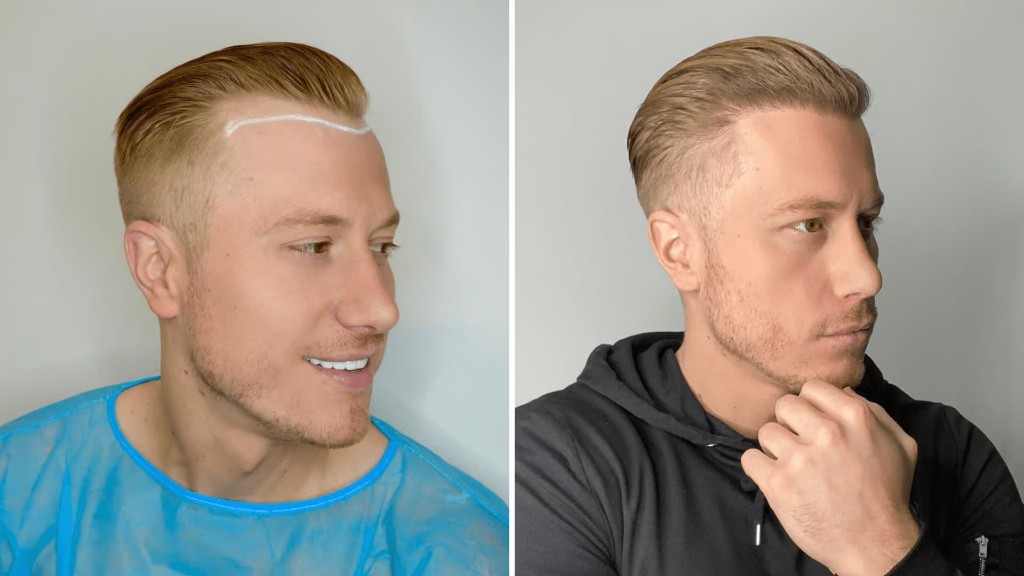
Transplantation may help when recession has stabilized or slowed, donor hair remains strong, expectations are realistic, and natural design is prioritized over aggressive lowering.
Who may be a suitable candidate?
- Stable or medically stabilized progression
- Adequate donor density and quality
- Realistic expectations about density and framing
- Clear goals for temple or frontal restoration
- No untreated inflammatory scalp condition
Why donor management matters
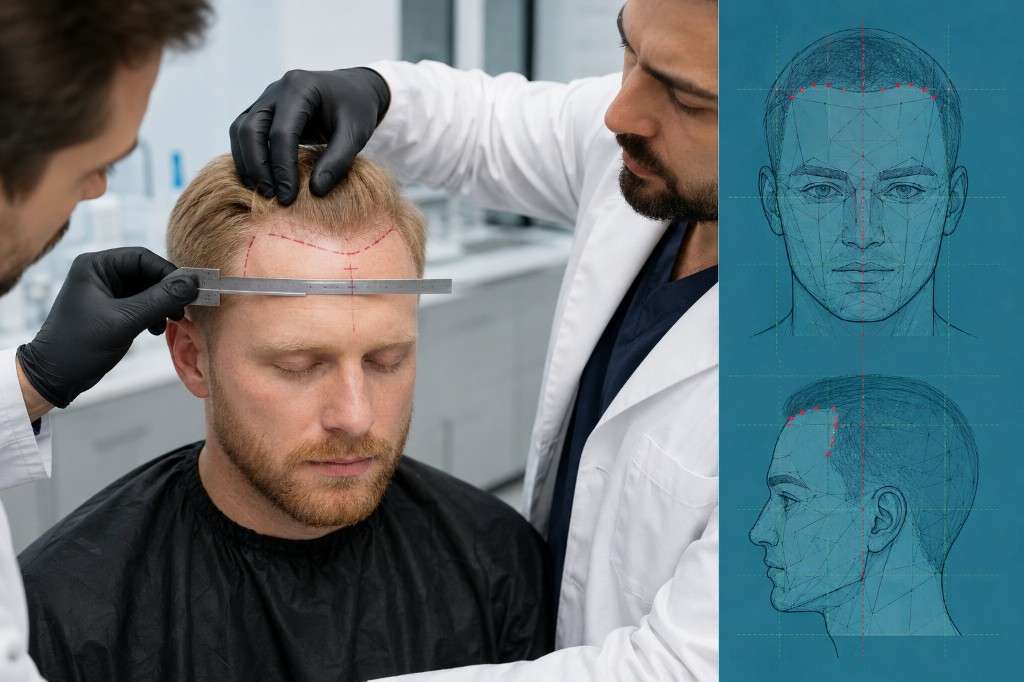
The donor area is finite. Aggressive extraction without long-term planning may create visible donor thinning or limit future options. At Turkus Hair Transplant Clinic in Spain, planning prioritizes controlled extraction, natural density transitions, and temple framing that suits the face.
FUE, Sapphire FUE, and DHI options
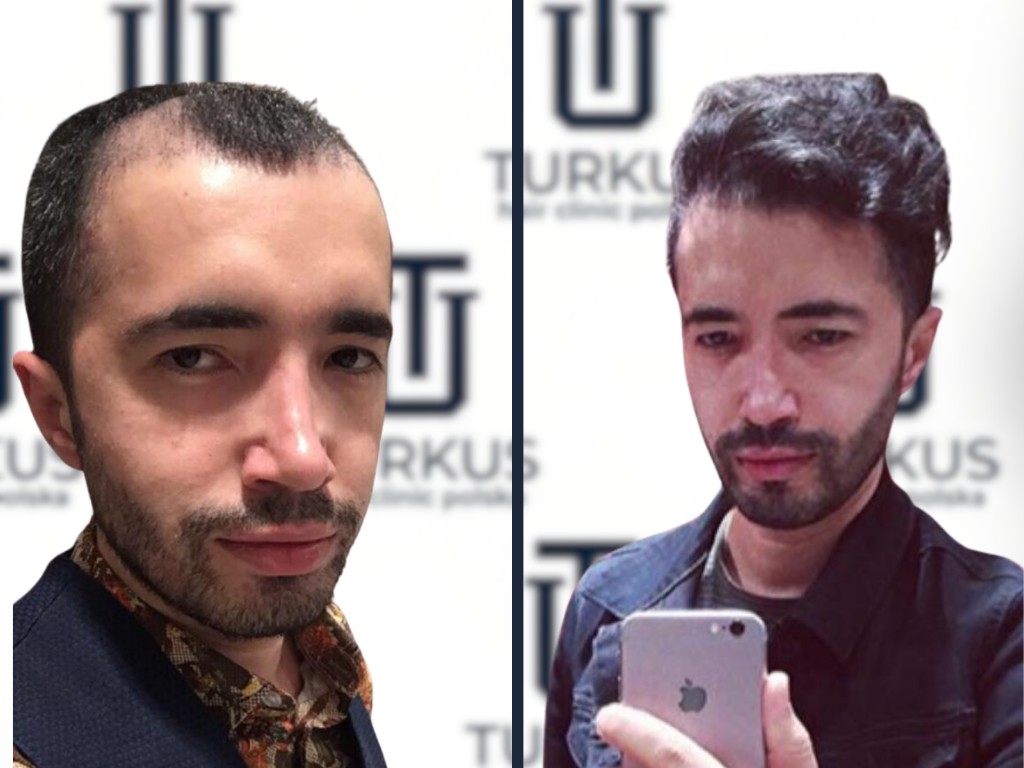
FUE, Sapphire FUE, and DHI may be suitable after evaluation depending on graft needs, hair characteristics, and design goals. Results vary between patients. The focus remains natural direction, density balance, and long-term donor preservation rather than chasing unrealistic numbers.
Specialists at Turkus Hair Transplant Clinic, Spain note: "Successful hairline restoration depends more on strategic design and donor preservation than simply lowering the line as far as possible."
When Should You See a Hair Specialist?
Professional evaluation becomes worthwhile when uncertainty persists, progression seems active, or treatment decisions feel overwhelming.
- Temple corners moving backward in sequential photos
- Visible miniaturized hairs behind the frontal line
- Crown thinning alongside temple change
- Sudden or patchy shedding unlike your usual pattern
- Strong family history and rising anxiety about progression
- Considering medication or surgery and needing personalized guidance
At Turkus in Spain, consultation includes scalp examination, progression history, density assessment, and honest discussion of medical and surgical options. Turkish surgical expertise supports the team as a trust signal; your care stays local in Spain.
Specialists at Turkus Hair Transplant Clinic, Spain note: "Early specialist input often clarifies whether the pattern is mature, actively receding, or mixed. That clarity reduces years of unnecessary worry or delayed treatment."
Why Choose Turkus Hair Transplant Clinic?
Turkus is a Turkish-led hair transplant clinic in Spain. Turkish surgical expertise is part of our team; your consultation, procedure planning, and aftercare stay local in Spain.
We focus on natural-looking results, clear communication, and personalized follow-up in Spain. We do not recommend traveling to Turkey instead of local care.
Options such as FUE, DHI, and Sapphire FUE may be suitable after evaluation. Results vary between patients; graft estimates require a consultation, not online guesses.
Specialists at Turkus Hair Transplant Clinic, Spain note: "The goal is an honest plan based on your pattern and goals, not promises that apply to every patient."
FAQs About Mature vs Receding Hairlines
What is the difference between a mature and receding hairline?
A mature hairline usually stabilizes after modest upward shift with strong density behind the edge. A receding hairline continues moving backward with thinning, miniaturization, or both over time.
At what age does a mature hairline appear?
Most men notice maturation between the late teens and early thirties. Stability after initial change is more important than exact age.
Is an M-shaped hairline always balding?
No. A mild M-shaped hairline can be normal when progression stops and density remains strong behind the frontal edge.
Can a receding hairline grow back naturally?
True recession linked to androgenetic alopecia rarely fully reverses without treatment. Temporary shedding from stress or illness may improve once the trigger resolves.
Does minoxidil work on a receding hairline?
Minoxidil may help strengthen miniaturized follicles and slow visible thinning in some patients. Results vary and require consistent use.
Should I take finasteride for temple recession?
Finasteride may be suitable for some men with DHT-related recession after medical evaluation. Discuss risks, benefits, and mood concerns with a clinician before starting.
How do I know if I am Norwood 2 or just maturing?
Norwood 2 describes appearance, not destiny. Stability, density behind the line, miniaturization, and crown status determine whether the pattern is mature or actively progressing.
When is a hair transplant appropriate for recession?
Surgery may be considered when progression has stabilized, donor quality is adequate, and natural design goals are realistic. FUE, Sapphire FUE, or DHI may be suitable after consultation.
Can stress alone cause temple recession?
Stress may cause diffuse temporary shedding. Classic progressive temple recession with miniaturization usually relates to androgenetic patterns rather than stress alone.
When should I book a consultation in Spain?
Book evaluation if temples keep moving in photos, miniaturized hairs appear, crown thinning develops, or you need help choosing between monitoring, medication, and surgery.
Worried Your Hairline Is Changing?
Hairline changes feel personal and urgent because they affect identity, photos, and confidence. Yet not every shift means progressive baldness. Some patterns mature and stabilize. Others require medical stabilization or surgical planning later.
At Turkus Hair Transplant Clinic in Spain, the team evaluates progression history, density behind the frontal line, miniaturization, crown status, and donor quality. The goal is honest guidance based on biology, not internet panic or shape labels alone.
Specialists at Turkus Hair Transplant Clinic, Spain note: "Understanding whether your hairline is maturing or receding changes the entire plan. Stability deserves reassurance. Active progression deserves action before options narrow."
If you are comparing old photos, noticing temple movement, or unsure whether your pattern is normal, request a free consultation and professional hairline assessment at Turkus in Spain. Results vary between patients; personalized evaluation is recommended before any treatment plan.